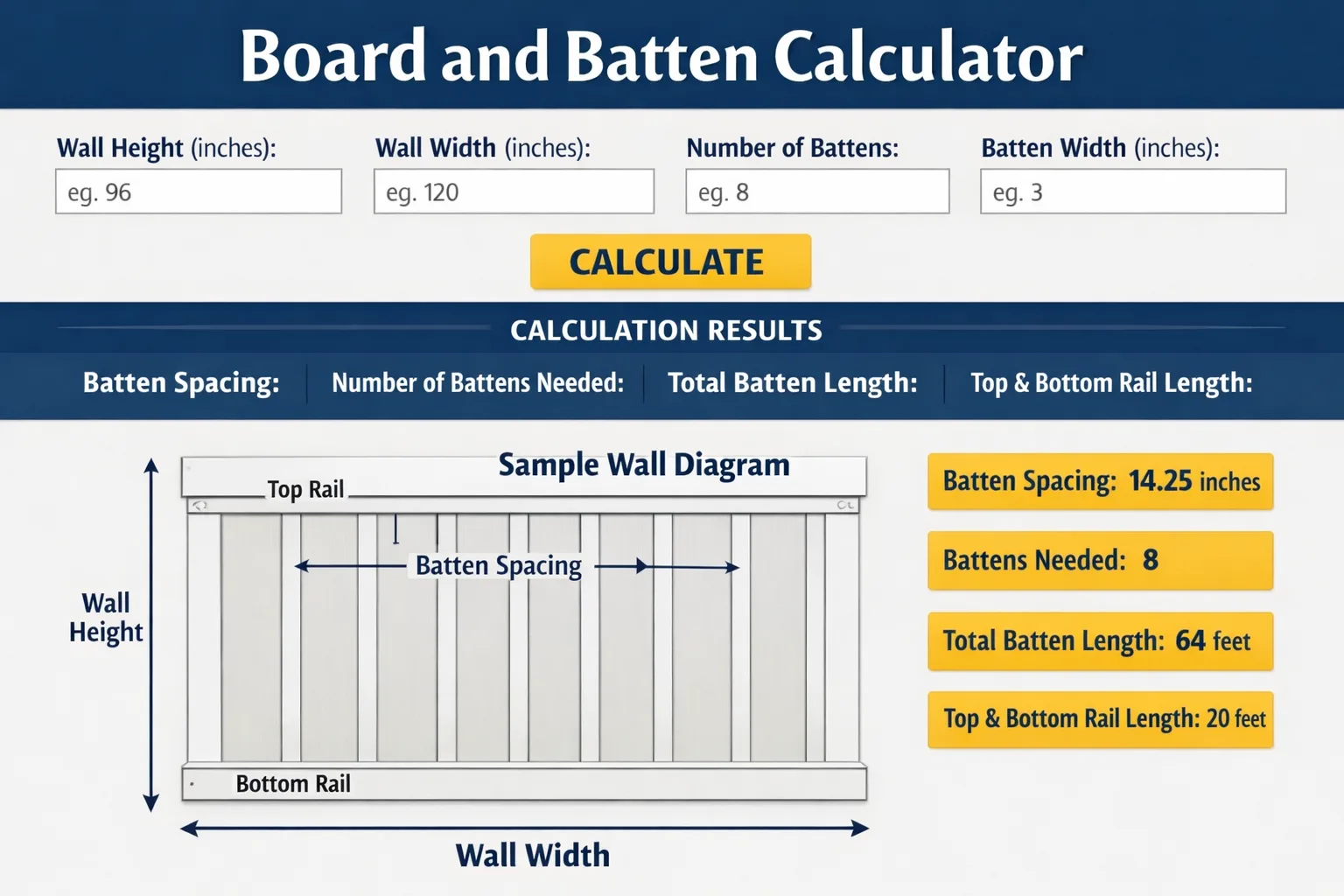
Whether someone is renovating a farmhouse exterior or refreshing a living room accent wall, board and batten siding and wainscoting remain some of the most sought-after design choices in modern architecture. But getting the look just right takes more than a trip to the hardware store it takes careful planning, the right measurements, and ideally, a reliable board and batten calculator to take the guesswork out of the process.
This guide covers everything homeowners, designers, and contractors need to know about board and batten walls, exterior siding, interior applications, spacing formulas, sizing rules, and much more. By the end, readers will have a solid understanding of how to plan, measure, and execute a beautiful board and batten project from start to finish.
What Is Board and Batten? A Quick Overview
Board and batten is a classic wall treatment that uses alternating wide boards and narrow strips (called battens) to create a visually striking, textured surface. Originally developed as a practical siding method for barns and rural buildings, it has found its way into contemporary homes both inside and out.
Today, board and batten wood is available in a variety of species, including cedar, pine, spruce, and engineered options. Homeowners can find it applied on board and batten exterior facades, board and batten interior walls, and even as a board and batten wall accent in living rooms, bedrooms, and hallways. The style blends seamlessly with farmhouse, craftsman, modern, and transitional aesthetics.
Why Use a Board and Batten Calculator?
A board and batten calculator is a digital tool that helps users determine the exact number of boards, battens, and materials needed for their specific wall or exterior surface. Instead of doing complex math by hand, the calculator takes in basic measurements like wall width, board width, and batten width and produces an accurate layout plan.
Using a board and batten calculator app makes it even easier to plan on the go. Many homeowners reach for these tools right from their smartphones while standing in their living room or walking around the outside of their house. For those who prefer metric units, a board and batten calculator cm version can handle metric inputs just as effectively.
From a square board and batten calculator that helps with square footage estimation to tools that account for spacing across multiple walls, these digital aids save time, reduce material waste, and prevent costly mistakes.
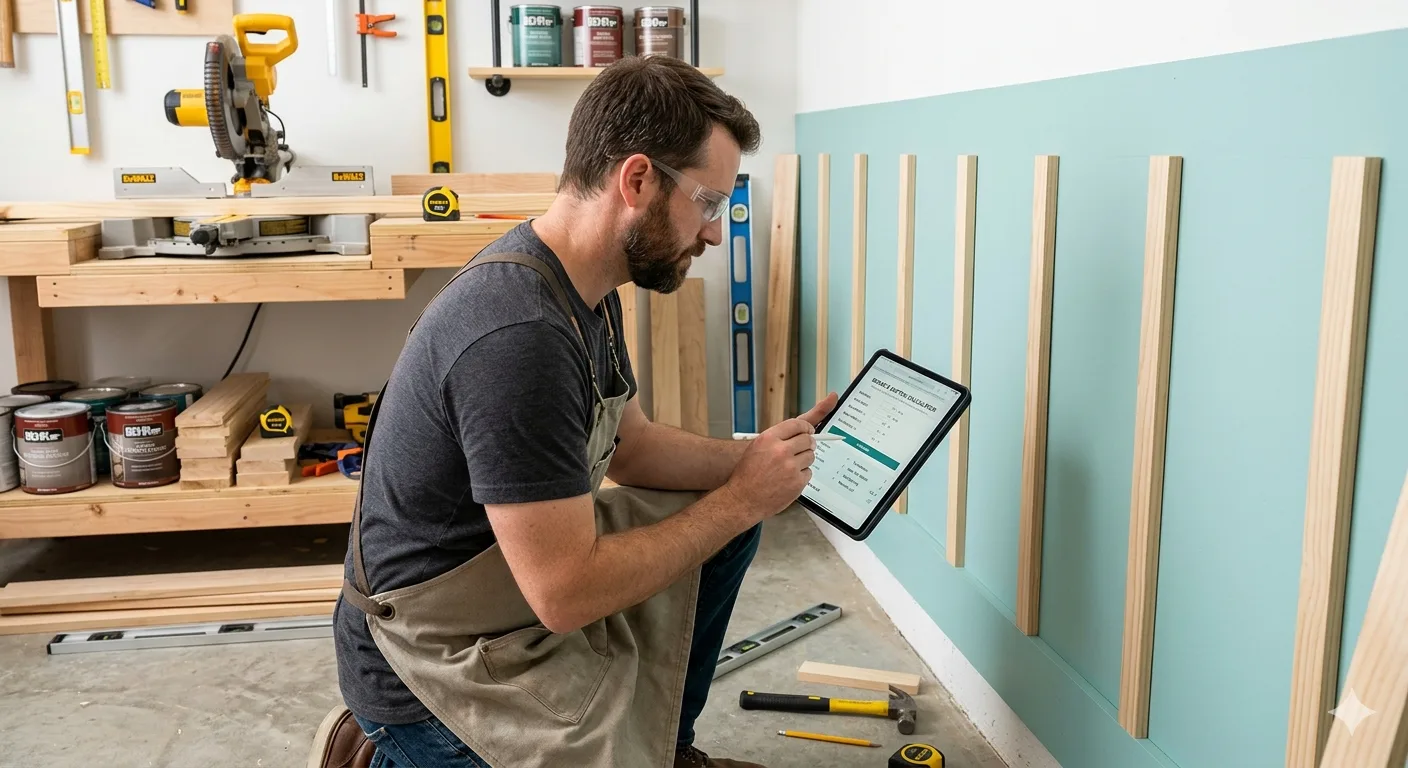
Understanding Board and Batten Size and Spacing
One of the most critical steps in any board and batten project is getting the size and spacing right. The board and batten size and spacing will directly influence the overall look and proportional balance of the finished wall. Get it wrong, and the result can look awkward or uneven; get it right, and the space transforms beautifully.
What Is the Typical Board and Batten Spacing for Interiors?
The typical board and batten spacing interior ranges from 12 to 16 inches between battens, measured from center to center. However, this is not a hard rule designers and homeowners often adjust spacing based on wall height, room size, and personal preference. A taller wall might benefit from wider spacing, while a lower ceiling might look better with narrower gaps.
For those wondering about typical board and batten spacing interior rules, it helps to know that most designers aim for spacing that creates an equal visual rhythm across the full wall width. This usually involves dividing the wall width by a spacing value and then adjusting until the gaps on each end feel balanced.
Board and Batten Width: Choosing the Right Dimensions
Board and batten width plays a major role in the overall style of the finished wall. Wider boards create a bold, dramatic look, while narrower boards tend to feel more refined and traditional. The battens, or narrow strips placed over the seams, are typically 2 to 4 inches wide.
A popular choice for DIY projects is 1x4 board and batten, which uses 1-inch by 4-inch lumber for the battens. This size is widely available, easy to work with, and produces a clean, proportional look on most standard walls. Paired with wider backing boards, it creates a classic layered effect that reads well from a distance.
For exterior applications, board and batten dimensions interior and exterior can differ. Exterior boards are often wider to account for the scale of the building, while interior applications may use narrower boards for a more intimate feel.
The Board and Batten Spacing Formula Explained
The board and batten spacing formula is the mathematical approach used to figure out exactly how far apart battens should be placed across a given wall. The goal is to achieve even, symmetrical spacing that looks intentional and polished.
Here is a simplified version of the formula most often used:
Total Wall Width – (Number of Battens × Batten Width) = Total Gap Space
Total Gap Space ÷ (Number of Gaps) = Individual Gap Width
The number of gaps is always one more than the number of battens. For example, if a wall has five battens, there will be six gaps (one on each end, and four between battens).
This board and batten spacing formula helps ensure that the first and last batten sit at a visually pleasing distance from the wall's edges, and that all spacing between battens remains consistent throughout. Many online Board and Batten Calculator automate this formula, asking only for the wall width and desired spacing, then generating the exact layout.
Board and Batten Spacing Across Multiple Walls
One challenge that often catches DIYers off guard is board and batten spacing multiple walls. When two walls meet at a corner, maintaining consistent spacing on both surfaces requires extra planning.
The key is to calculate each wall independently and then decide how the battens should meet at the corners. In some cases, the spacing on each wall can differ slightly, as long as the visual difference isn't noticeable from a normal viewing angle. The more symmetrical the rooms, the easier it is to maintain consistent spacing across multiple walls.
How to Space Board and Batten Around Corners
Knowing how to space board and batten around corners is an essential skill for any board and batten project. There are several approaches depending on whether the corner is inside or outside.
For board and batten inside corners, many installers use a simple approach: run both walls' battens right into the corner, letting one overlap the other slightly. This creates a clean, finished appearance without the need for custom-cut trim pieces. Alternatively, a square-cut batten can be used to cap the inside corner, creating a defined seam.
For exterior corners, the boards are usually mitered at 45-degree angles to wrap cleanly around the edge. Understanding how to end board and batten at a corner on the exterior is particularly important for maintaining weather resistance and visual consistency. A corner board trim piece is another option one that effectively caps the corner while framing the board and batten wall on both sides.
Exterior Board and Batten: Rules, Materials, and Design
Exterior board and batten siding is more than a style choice it is a functional cladding system that protects a home from the elements. Understanding exterior board and batten rules helps ensure the installation performs as well as it looks.
Exterior Board and Batten Rules to Follow
There are several key board and batten rules that apply specifically to exterior applications. First, the wide boards must be installed vertically, with the battens placed over the seams to prevent water infiltration. The battens should always overlap the boards on both sides by at least 3/4 inch to create a proper weather seal.
Another important rule under exterior board and batten rules is proper gapping. The boards themselves should be spaced slightly apart typically 1/8 to 1/4 inch to allow for wood expansion and contraction due to temperature and humidity changes. If boards are installed too tightly, they may buckle or warp over time.
Finally, all exterior wood should be primed and sealed before installation to prevent moisture damage. Painting board and batten exterior surfaces with a high-quality exterior paint adds both protection and visual appeal, and it's a step that should never be skipped.
Modern Board and Batten Exterior Styles
The modern board and batten exterior aesthetic has shifted significantly in recent years. While traditional farmhouse applications favored natural wood tones and earthy colors, modern board and batten exterior designs often feature bold dark hues like charcoal, navy, and forest green, or crisp white finishes that complement large windows and clean architectural lines.
When choosing whether to use wood board and batten siding or a fiber cement alternative, homeowners should consider their climate, maintenance tolerance, and budget. Plywood board and batten exterior installations offer a cost-effective option that still delivers strong curb appeal. Plywood panels are cut and installed similarly to traditional lumber, but they tend to be more dimensionally stable in humid environments.
For a premium natural look, wood board and batten exterior installations using cedar or redwood are hard to beat. These woods accept stain and paint beautifully, and with proper maintenance, they can last for decades.
Board and Batten Interior Walls: Design Ideas and Techniques
Inside the home, board and batten interior walls add texture, depth, and architectural interest to otherwise flat surfaces. From full-height paneling in entryways to half-wall wainscoting in dining rooms, the design possibilities are nearly endless.
Types of Board and Batten Interior Applications
There are several distinct types of board and batten interior styles to consider. Full-height board and batten covers the wall from floor to ceiling, creating a dramatic, immersive effect. Half-height wainscoting typically installed to chair rail height is a more traditional option that pairs beautifully with wallpaper or painted surfaces above.
Another popular choice involves board and batten interior walls ideas that play with color. Some designers paint the boards and battens the same shade as the surrounding wall to create a tonal, textural effect rather than a bold contrast. This board and batten same color as wall approach works especially well in bedrooms and bathrooms where a calm, cohesive atmosphere is desired.
For those seeking inspiration, looking at images of board and batten interior walls across design platforms can reveal countless creative applications from dramatic black accent walls to soft sage green dining rooms with white trim detail.
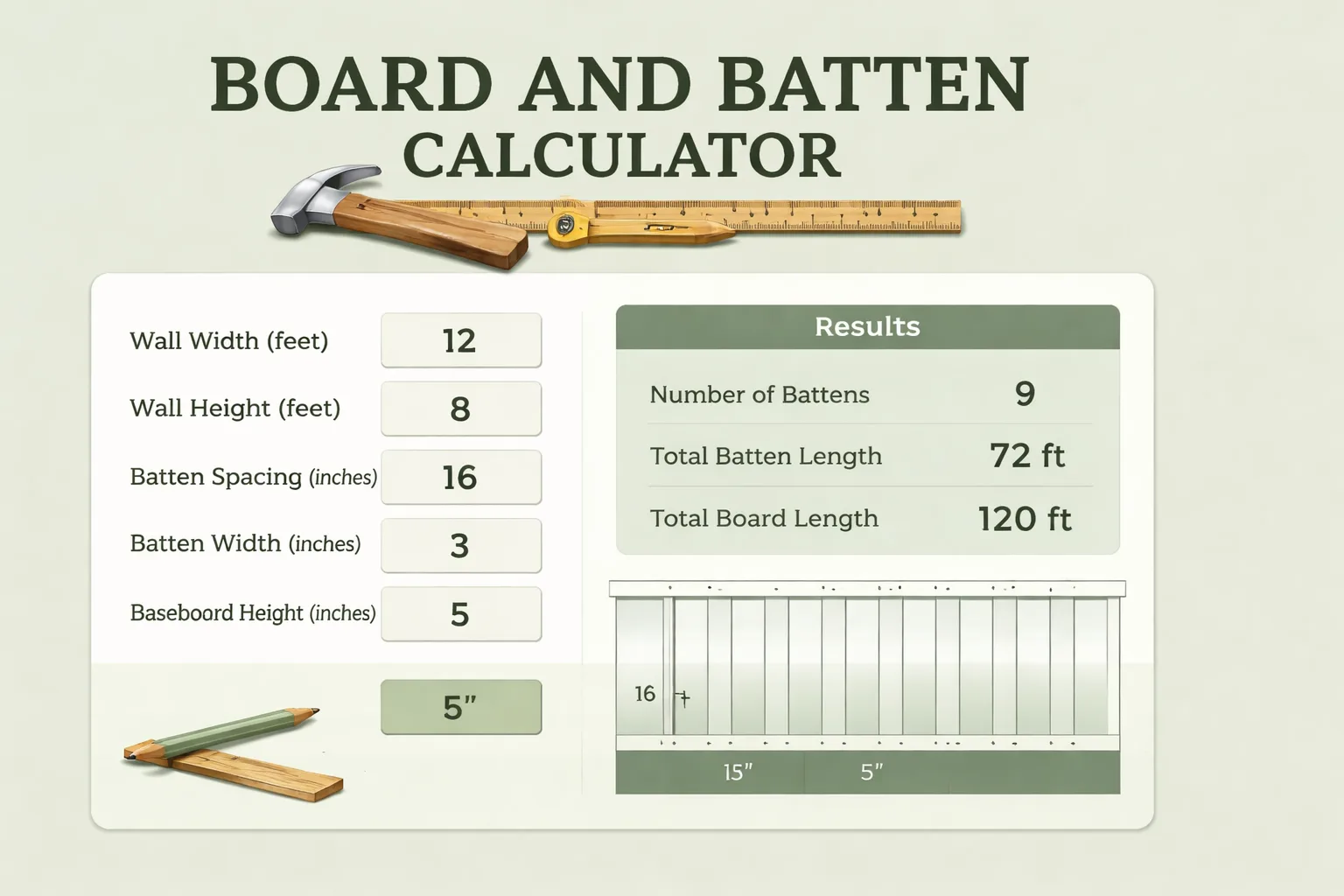
Wood Board and Batten Interior Choices
Wood board and batten interior applications often use MDF, pine, or poplar because these materials are easy to paint, relatively inexpensive, and widely available. MDF is particularly popular for interior use because it has a smooth surface, doesn't have knots, and holds paint extremely well.
For a more rustic feel, solid wood board and batten wood can add warmth and character to a space. Knotty pine, for instance, has a charming, casual quality that suits cabins, farmhouses, and eclectic interiors. Plywood board and batten interior walls are another budget-friendly option that delivers a clean look when properly primed and painted.
Painting Board and Batten Interior
Painting board and batten interior surfaces requires a bit more patience than painting a flat wall. The goal is to achieve clean, sharp lines between the boards, the battens, and the surrounding wall or ceiling. Caulking all seams before painting ensures a professional, seamless finish, and using a small angled brush for detail work between battens saves significant time and effort.
Painting board and batten interior walls in a contrasting color to the room's main wall color creates a bold, graphic effect, while painting them the same color maintains a softer, more subtle texture.
Board and Batten Trim Details and Corner Techniques
Board and batten trim refers to the additional molding and finishing details applied around windows, doors, ceilings, and floors to complete the look of a board and batten installation. Trim pieces frame the design and give it a polished, intentional appearance.
Board and Batten Around Windows
Applying board and batten around windows adds architectural character and ties the window into the overall wall design. The most common approach is to frame each window with a wide casing board and then continue the batten pattern up to the edge of the casing on both sides. This creates a cohesive look that makes windows feel like intentional design elements rather than interruptions in the pattern.
When planning board and batten around windows, it helps to start the spacing layout from the center of each window and work outward so that the battens land symmetrically on both sides of the opening. Calculators that support this type of layout adjustment can be particularly helpful in these situations.
Read More : Vorici Calculator
How to Install Board and Batten: Exterior and Interior Tips
How to Install Board and Batten Exterior
Learning how to install board and batten exterior begins with proper substrate preparation. The wall sheathing must be clean, flat, and properly weather-wrapped before any boards go up. Starting from the corners and working inward ensures that the most visible sections of the wall have consistent, even spacing.
Each board should be fastened with exterior-rated screws or nails, and all edges should be caulked to prevent water infiltration. The battens go on last, nailed directly over the board seams to seal them and create the characteristic raised-strip pattern.
How to Attach Board and Batten to Drywall
For interior projects, knowing how to attach board and batten to drywall is essential. The battens and boards can be glued with construction adhesive and then secured with finish nails driven into the wall studs wherever possible. For areas between studs, construction adhesive alone can work for lightweight materials like thin MDF strips.
It's important to locate studs before starting and to mark them clearly along the wall. Driving nails into solid studs ensures a secure hold that won't pull away over time, even in high-traffic areas like hallways and entryways.
Accent Wall Calculator App: Planning Made Simple
Beyond dedicated board and batten tools, an accent wall calculator app can also help homeowners plan a variety of wall treatments, including board and batten, shiplap, and paneling. These apps typically allow users to enter wall dimensions and experiment with different board widths and spacing options before committing to a design.
Using a board and batten calculator app or an accent wall calculator app before purchasing materials can significantly reduce waste and help identify potential spacing issues before the first board ever goes up. Some apps even generate visual previews, giving a rough sense of how the finished wall will look at different board widths and spacing intervals.

Board and Batten Spacing Examples for Different Spaces
Looking at real board and batten spacing examples can help homeowners and designers understand how different spacing values translate to actual finished walls. Here are a few common applications:
In a standard 8-foot hallway, spacing battens 12 inches apart (center to center) creates a tight, formal rhythm that works well with traditional decor. Widening the spacing to 16 or 18 inches gives the same hallway a more relaxed, casual feel.
In a wide living room with 10-foot ceilings, spacing battens 18 to 24 inches apart creates an airy, modern look. Keeping the battens closer together around 12 to 14 inches creates a more detailed, intricate pattern that suits craftsman and colonial styles.
Reviewing board and batten spacing examples online, particularly from real home renovation projects, is one of the best ways to calibrate personal preferences before committing to a final layout.
Final Thoughts
Board and batten is a timeless design technique that brings warmth, texture, and character to any home inside and out. Whether someone is planning a modern board and batten exterior makeover, a cozy wood board and batten interior accent wall, or a full board and batten siding overhaul, careful planning is the key to a beautiful result.
A good board and batten calculator takes the stress out of the math, helping homeowners and contractors determine the perfect board and batten size and spacing, manage board and batten spacing multiple walls challenges, and plan tricky details like board and batten around windows and inside corners. Combined with a solid understanding of exterior board and batten rules and best practices for interior installation, anyone can achieve professional-looking results on their next board and batten wall project.
Also Checkout This Calculator : Snow Day Calculator