Introduction
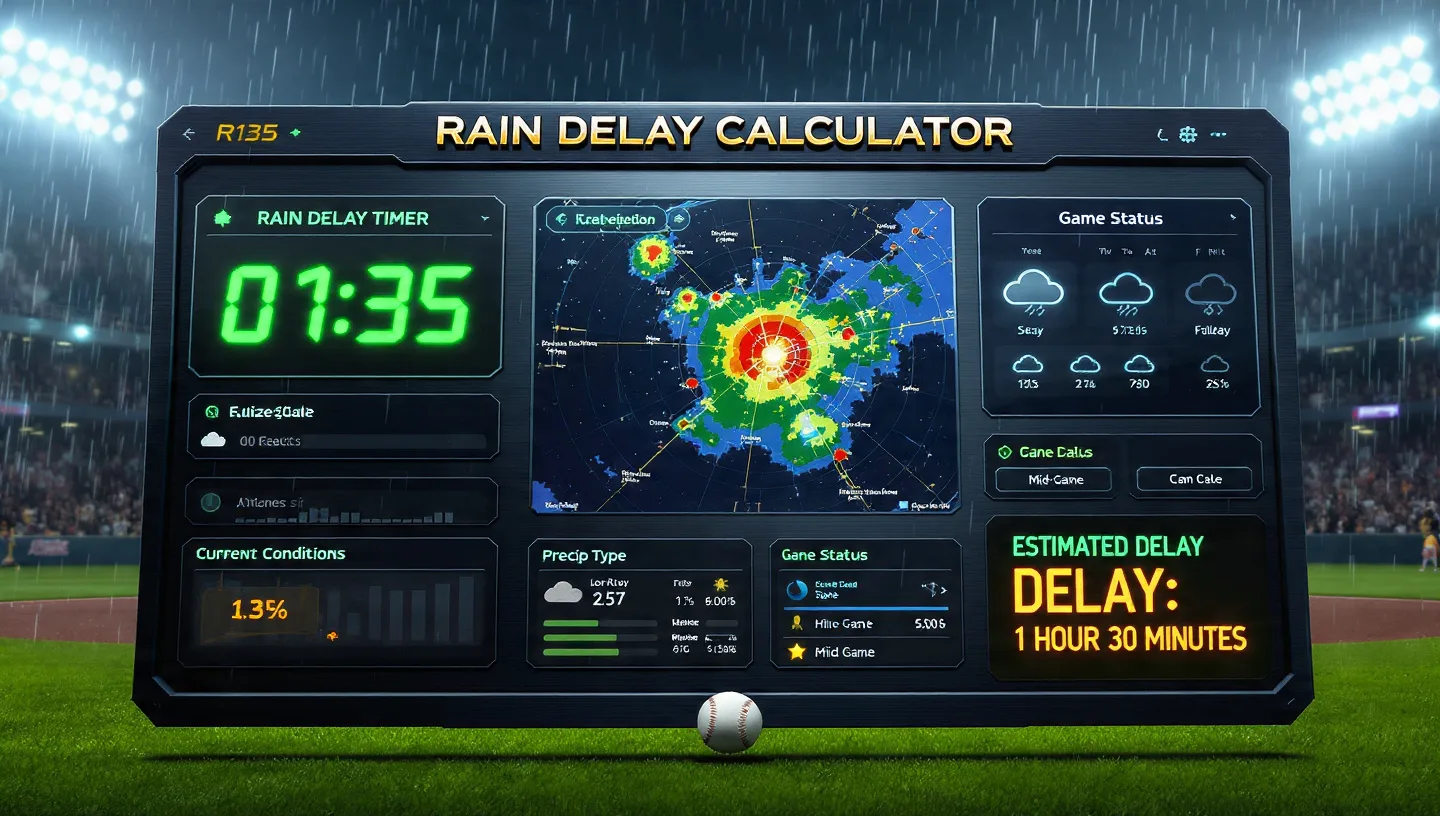
Rain delays are an inevitable part of outdoor sports. Whether it's a dramatic storm rolling in during the ninth inning of a Major League Baseball game or an unexpected shower interrupting a tense cricket match, weather has a way of throwing even the best-planned events into uncertainty. That's where a rain delay calculator comes in a practical tool designed to help teams, organizers, and fans estimate how much time is lost and what happens next.
This guide dives deep into how rain delay calculators work across different sports, why they matter, and how they're used in both amateur and professional settings. From the cricket rain delay calculator used in international fixtures to the MLB rain delay calculator relied upon by major league clubs, there's a lot more science and strategy behind these tools than most people realize.
What Is a Rain Delay Calculator?
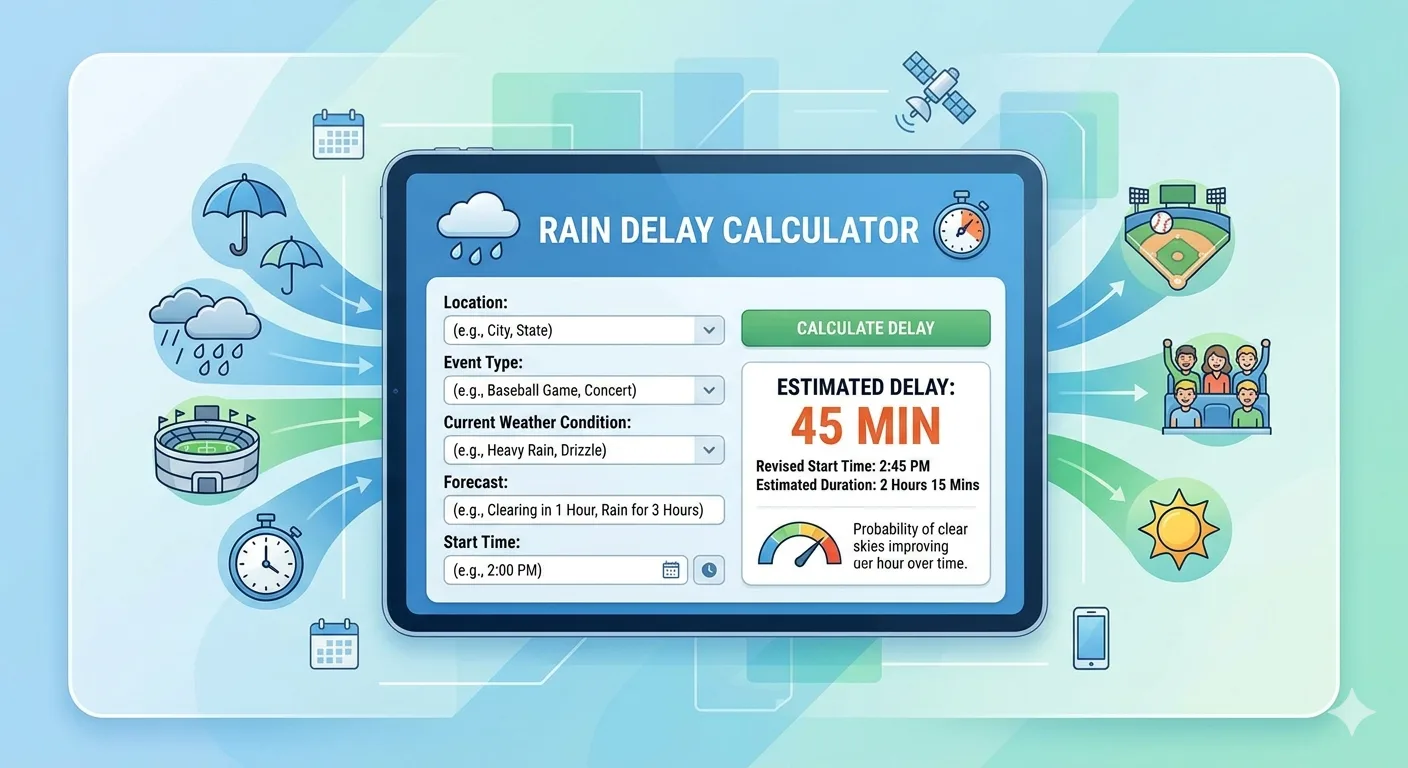
A rain delay calculator is a tool digital or manual that helps determine the effect of weather interruptions on a sporting event. Depending on the sport, it can calculate things like how long a delay has lasted, whether enough time remains to complete a game, and what score or result should be applied if a game cannot resume.
The concept sounds simple, but the mechanics behind these calculators can be surprisingly complex. Different sports have very different rules around weather interruptions, and the calculations often depend on multiple variables such as overs remaining, innings completed, time available, and weather forecasts.
Key Variables Used in Most Rain Delay Calculators
• Total time lost to weather
• Time remaining in the scheduled play window
• Score and game state at the point of interruption
• Minimum requirements to declare a valid result
• Playing conditions after the delay ends
Cricket Rain Delay Calculator: How It Works
Cricket is arguably the sport most affected by rain delays, and the cricket rain delay calculator is one of the most sophisticated tools in all of sport. International cricket, especially limited-overs formats like One Day Internationals (ODIs) and T20 matches, uses the Duckworth-Lewis-Stern (DLS) method to recalculate target scores whenever weather interrupts play.
What Is the DLS Method?
The DLS method named after statisticians Frank Duckworth, Tony Lewis, and Steven Stern is a mathematical formula that recalculates a team's target score based on the resources (overs and wickets) available to each side. When rain cuts into a match, the system adjusts the target fairly so neither team is unfairly advantaged or disadvantaged.
A cricket rain delay calculator that uses the DLS method takes into account the number of overs already bowled, the wickets lost, and the overs remaining. It then applies a resource percentage table to set a revised target for the batting side. This makes the cricket rain delay calculator one of the most mathematically involved tools in sports management.
When Is the Cricket Rain Delay Calculator Applied?
• When the first innings is interrupted by rain before the batting side has faced all their overs
• When the second innings is shortened, requiring a revised target
• When multiple interruptions occur during either innings
• When insufficient overs remain to constitute a valid result
Minimum Overs Rule in Cricket
It's also worth noting that even with a cricket rain delay calculator, a match can only produce an official result if a minimum number of overs has been bowled. In ODI cricket, that minimum is typically 20 overs per side; in T20s, it's often 5. If the match falls below these thresholds, the result is declared a no-result or a tie, depending on the stage of play.
MLB Rain Delay Calculator: Baseball's Approach to Weather Disruptions
In Major League Baseball, the approach to rain delays differs significantly from cricket. Rather than recalculating scores, the MLB Rain Delay Calculator is used primarily to track delay durations and determine whether conditions are safe enough for play to resume. Baseball's rules around rain delays are less mathematical and more operational in nature.
How MLB Handles Rain Delays
When rain begins to fall during an MLB game, the umpires in consultation with the home team's groundskeeper and league officials decide whether to issue a rain delay. The tarp is rolled out to protect the infield, and both teams wait in their respective clubhouses or dugouts while conditions are monitored.
An MLB rain delay calculator is used behind the scenes by team operations staff to track the elapsed delay time, monitor weather radar, and estimate when play might resume. These tools integrate live weather data and historical delay information to give teams a realistic window for getting back on the field.
What Happens to a Game After an MLB Rain Delay?
• If a game has reached five innings (or four and a half innings with the home team leading), it is considered official.
• If the game is official when delayed and cannot resume, the score at that point stands as the final result.
• If the game has not yet become official and cannot resume, it is typically suspended and resumed at a later date.
• Games postponed before they become official are generally replayed in full.
The Role of Weather Technology in MLB Delays
Modern MLB teams use sophisticated weather monitoring technology alongside their MLB rain delay calculator to make these decisions. Doppler radar integration, real-time precipitation tracking, and predictive meteorology tools all play a role in deciding whether a delay of 30 minutes or three hours is worth waiting out.
Baseball Rain Delay Calculator: A Broader Look Beyond the Majors
While much of the spotlight falls on professional leagues, a baseball rain delay calculator is just as important at the amateur, collegiate, and minor league levels. These tools help leagues and umpires make consistent, fair decisions about rain-interrupted games at every level of the sport.
High School and College Baseball Rain Rules
In high school and college baseball, the rules around rain delays tend to vary by state association and conference. A baseball rain delay calculator at these levels is often a simpler tool typically used to track total delay time and determine whether the delay pushes past the maximum allowable window before the game must be suspended or cancelled entirely.
Most collegiate associations follow rules similar to professional baseball, declaring a game official after five innings (or four and a half with the home team ahead). However, some tournaments and championship events have stricter requirements, and a baseball rain delay calculator helps administrators manage these situations in real time.
Youth and Amateur Baseball Rain Delay Considerations
For youth leagues and amateur clubs, a baseball rain delay calculator helps coaches and parents understand when a game is likely to resume or be called. Key factors include the time already invested in the game, the age group of players (younger players often face stricter rain delay limits for safety reasons), and the availability of field conditions to safely resume play.
Comparing Rain Delay Calculators Across Sports
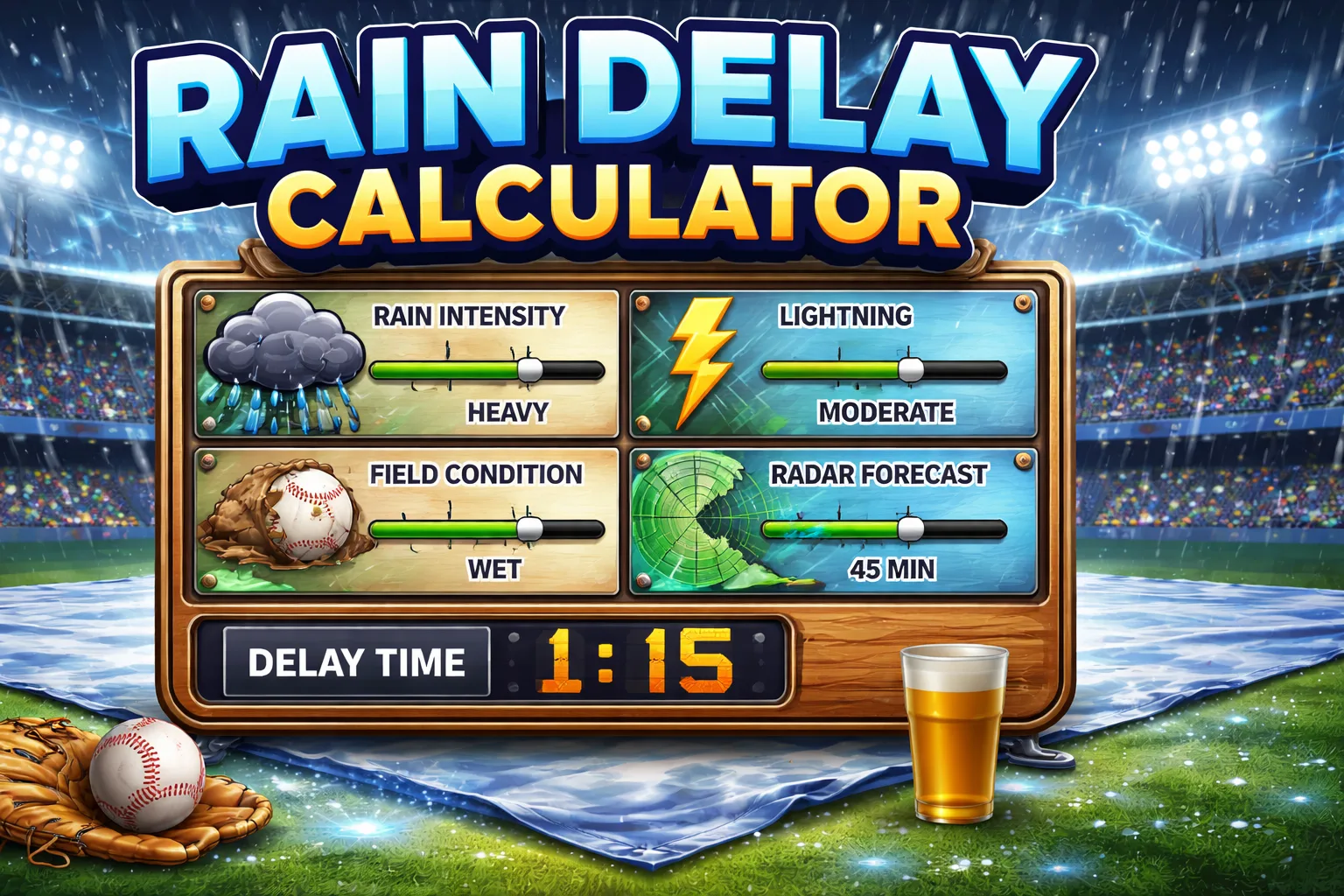
Looking across cricket, MLB, and general baseball, it becomes clear that while the term 'rain delay calculator' is shared, the underlying mechanics are very different. Here's a quick comparison of how each sport uses these tools:
Cricket Rain Delay Calculator
• Uses the DLS method to recalculate target scores
• Applied during both innings in limited-overs formats
• Managed by match officials and third umpires
MLB Rain Delay Calculator
• Tracks delay duration and weather conditions
• Determines game official status after five innings
• Integrated with live radar and weather technology
General Baseball Rain Delay Calculator
• Applied across amateur, collegiate, and minor league play
• Rules vary by governing body and competition level
• Simpler tools often used compared to professional settings
Why Rain Delay Calculators Matter for Fans
From a fan's perspective, a rain delay calculator can transform a frustrating weather interruption into an informed waiting experience. Rather than staring at the sky and guessing when play will resume, fans with access to real-time rain delay tools can check weather radar projections, see how much time has passed, and get a clearer sense of whether the game is likely to continue.
For fantasy sports enthusiasts, the implications go even further. A delayed or cancelled game can affect player statistics, scoring, and lineup decisions. Having access to accurate rain delay information whether through a cricket rain delay calculator or an MLB rain delay calculator helps fantasy players make smarter decisions in real time.
Read More : Voltage Drop Calculator
The Future of Rain Delay Calculators
As technology continues to advance, rain delay calculators are becoming more sophisticated. Artificial intelligence and machine learning models are now being integrated into weather prediction tools used by sports organizations, allowing for earlier and more accurate predictions of rain delays before they even begin.
Some cricket boards are exploring enhanced versions of the DLS calculator that can incorporate real-time ball-tracking data and pitch condition assessments. In baseball, smart stadiums are being designed with retractable roofs and drainage systems specifically engineered to minimize the frequency and impact of rain delays altogether.
For smaller leagues and amateur sports, affordable digital tools and smartphone apps are bringing rain delay calculator functionality to a wider audience than ever before, making it easier for coaches, players, and parents to stay informed and make good decisions during weather interruptions.
Tips for Players and Coaches During a Rain Delay
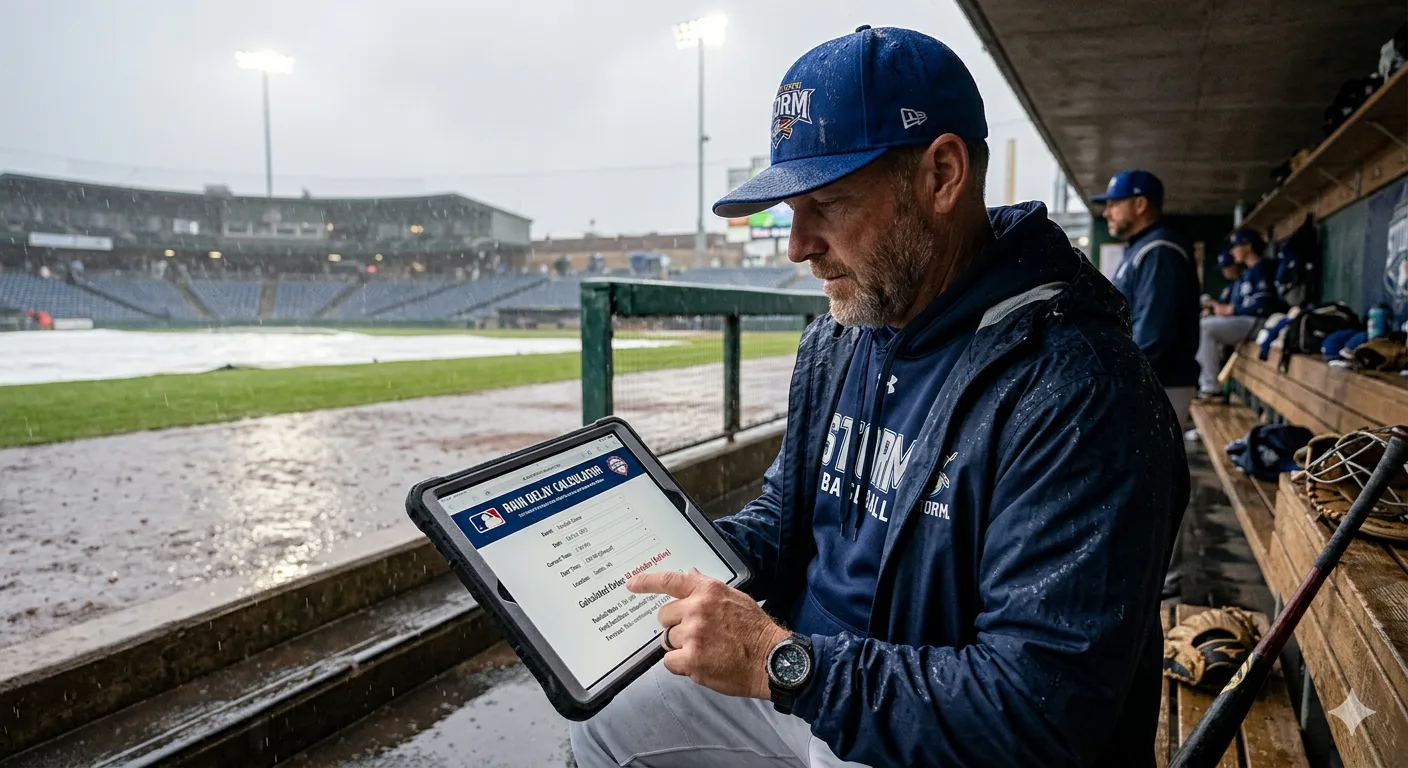
While the officials and calculators handle the technical side of a rain delay, players and coaches can use the downtime productively. Here are some practical tips for making the most of a weather interruption:
• Stay warm and loose cold muscles during a delay can increase injury risk when play resumes.
• Review game strategy and make any necessary adjustments based on the current score or match situation.
• Monitor weather apps alongside the official rain delay tools to get a sense of how long the delay might last.
• Hydrate and eat appropriately long delays can disrupt physical preparation routines.
• Use the time for mental preparation, especially in high-stakes matches where a rain delay can be mentally disruptive.
Conclusion
Whether it's a tense T20 finish being managed by a cricket rain delay calculator or a pennant-race game paused by a storm system tracked through an MLB rain delay calculator, weather delays are a defining feature of outdoor sport. Understanding how these tools work and why they matter gives fans, players, coaches, and officials a much deeper appreciation for the planning that goes into keeping sport fair and competitive, even when the skies don't cooperate.
From the complex DLS mathematics behind cricket's approach to the practical, radar-integrated tools used in baseball, the rain delay calculator continues to evolve alongside the sports it serves. And for everyone involved from a youth league coach waiting out a drizzle to a professional broadcaster covering a suspended World Series game having the right information at the right time makes all the difference.
Also Checkout This Calculator : Snow Day Calculator