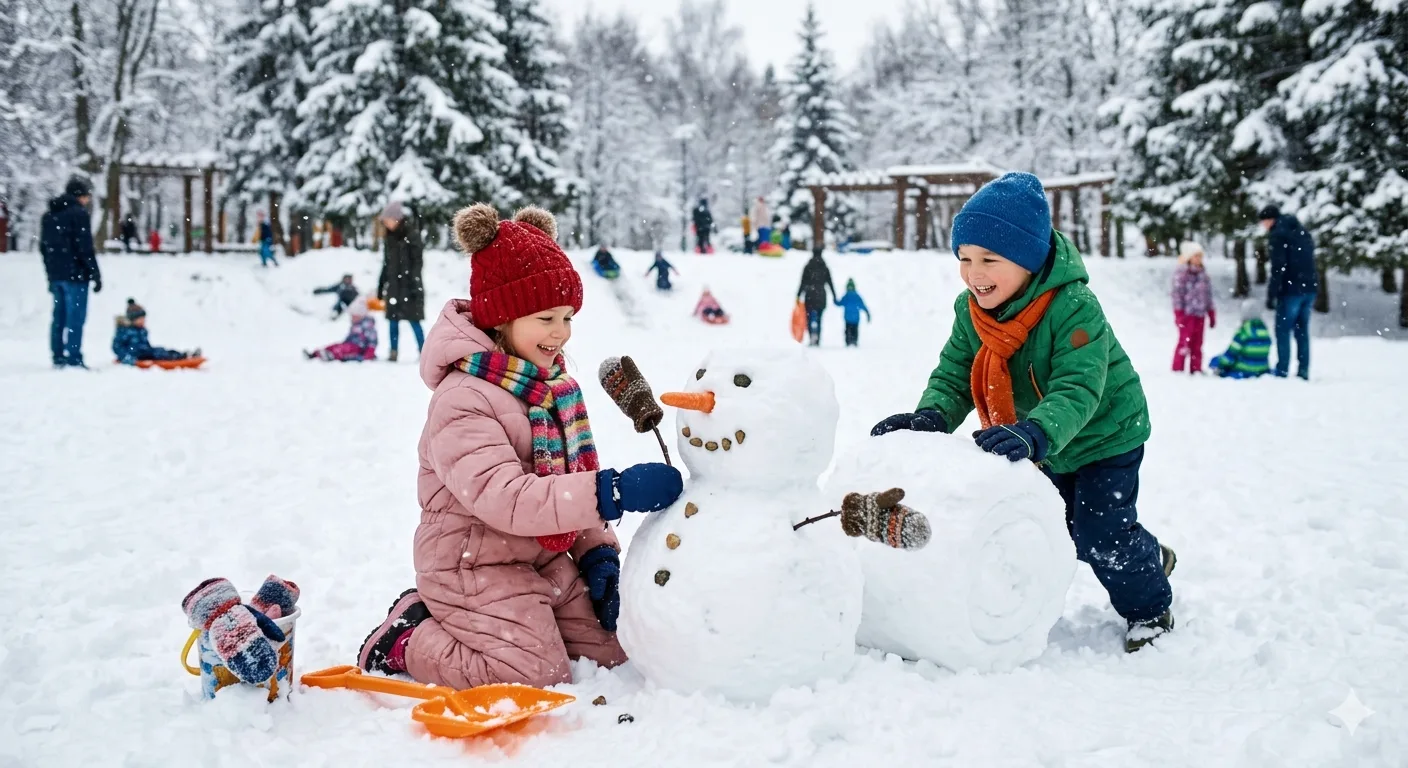
Snow day activities for kids can mean the difference between a day full of screen zombies on the couch and one that becomes a memory your children talk about for years. The school is closed, the world outside is blanketed in white, and suddenly you have an entire unstructured day stretching ahead of you.
This guide gives you 60+ carefully curated snow day ideas cover adventures, creative indoor crafts, hands‑on STEM experiments, cozy cooking projects and quiet activities that bring calm. Every snow day idea is organized by age group and energy level so you can find what you need in less, than a minute no matter how old your kids are or how much space you have.
You know the moment. The phone buzzes at 5:40 a.m., school is closed, and somewhere down the hall a small voice is already yelling "SNOW DAY!"
Two hours later the excitement has cooled off. Someone can't find a boot. Someone else is asking what there is to do, for the fourth time.
That's what this page is for. Below are more than 60 snow day activities for kids, from five-minute outdoor games to kitchen projects that keep little hands busy for an hour. Some cost nothing. Some need a jar and a bag of flour. A couple will even give you enough quiet to finish a work call.
I've also included the stuff most lists leave out: how to tell whether it's too cold to go outside, what to do when your kids are five years apart, and how to get through the day if you're working from home.
Before You Pick an Activity, Read the Day
Most snow days go wrong in the first hour, and the reason is usually the plan, not the kids. Somebody announces a huge project, everyone gets excited, and by 11 a.m. the whole thing has collapsed.
Start smaller. First look at the weather. Next look at who's at home. Then check your energy. If you are already tired a hot chocolate bar and a blanket fort will beat a science experiment every time.
My general rule is to go outside first. Kids are fresh, the snow is untouched, and nobody's cold yet. Then you come in, warm up, and let the day get quieter as it goes.
If you're reading this the night before a storm, you can see how likely a closure is with our snow day calculator. It's a lot nicer to plan ahead than to scramble at 6 a.m.
Why a Snow Day Is Worth More Than You Think
Adults tend to see a snow day as a scheduling problem. Fair. It really does wreck a work week.
But for kids it's rare free time. No practice, no worksheets, no one telling them what to do. Give a child a hill and a few hours and they'll invent rules, break them, argue about it, and make up better ones. That's a real skill, and it doesn't happen much in a packed school week.
It also gets them moving. Hauling a sled back up a slope is better exercise than most gym classes, and nobody complains because it's fun.
Cold-Weather Safety (The Boring Part That Saves the Day)
Dressing for Snow
Layers. That's the whole secret. A thermal base layer against the skin, fleece or wool over it, and a waterproof shell on top. Avoid cotton underneath, because once it's damp it stays damp and makes kids miserable.
Waterproof mittens beat gloves for younger children since their fingers stay warmer together. A trick that saves a lot of tears: slide a thin dry pair of gloves inside the mittens, and keep a spare pair waiting by the door. Wet hands are the number one reason kids give up early.
Wind Chill Matters More Than the Number on the Thermometer
Twenty degrees with no wind can feel great. Twenty degrees with a sharp wind feels nasty. What your skin actually experiences is the wind chill.
Roughly speaking when the wind chill falls to about –19°F (–28°C) exposed skin can develop frostbite in half an hour. Kids lose heat faster than adults so I would call it a day before that. If you're not sure, plug the numbers into our wind chill calculator and you'll know within seconds whether it's an outside day or an inside day.
Know When to Head Indoors
Uncontrollable shivering, slurred words or a child who suddenly gets clumsy or confused can mean hypothermia. Get them inside. Warm them up slowly. Skin that looks waxy, pale or feels numb on the nose, cheeks, fingers or toes may be frostbite. Warm it gently with water, not hot and call a doctor if it does not recover.
Even when nothing looks wrong bring kids inside every 30 to 45 minutes or to 20 minutes for toddlers. Swap out any clothes and give them something warm to drink. Children under five should always have an adult next to them and everyone should stay away from frozen ponds.
Ice that looks solid often isn't.
Sledding Without the Trip to Urgent Care
Sledding is the highlight of most snow days, and also where a lot of injuries happen. Pick a hill with a long flat stretch at the bottom, far from roads, fences, trees, and parking lots. Ride sitting up and feet first. Wear a helmet (a bike or ski helmet works fine). Walk up along the edge, never straight up the middle of the run.
Keep it to one rider on small sleds, and never tow anyone behind a vehicle. Not even a slow one.
Outdoor Snow Day Activities for Kids
If the weather allows it, this is where the best snow day memories usually come from. Here are 17 ideas, starting with the ones kids never get tired of.
Building Things
Skip the standard snowman for once and ask for a snow dragon, a dinosaur, or a very long caterpillar. Sticks, pinecones, and rocks make surprisingly good scales and teeth. Older kids often get more into it when you turn it into a contest.
A proper snow fort is better still. Pack snow into a plastic storage bin and flip it out for instant bricks. Add a doorway and a couple of windows, and you've bought yourself an hour or two.
Other builds worth trying include a snow maze carved with a shovel. Race through it then redesign it.. Create a snow obstacle course with mounds to hop tunnels to crawl through and a target for snowballs. Time each run and let the kids change the course between rounds.
For a little color, fill spray bottles with water and a few drops of food coloring and go paint the yard. Washable paint gives bolder results, and the next snowfall covers everything up. And never underestimate plain snow angels or a message written in fresh, untouched drifts. Toddlers love them.
Races and Games
Set up sled races with a stopwatch and a scoreboard. If you are short on sleds, a plastic saucer or a laundry basket works better than you might expect. For snow bowling line up plastic bottles and add a scoop of snow so they do not blow over. Knock them down with snowballs. Draw bullseyes on cardboard for target practice. Split into two teams for a round of capture the flag with a snow fort at each end.
Nature and Curiosity
Fresh snow is basically a notebook for wildlife. Go on an animal track hunt. Look for deer hoof prints the tidy hops of squirrels and the thin dotted lines left by mice. Snap photos so you can identify them later.
A scavenger hunt works too. Find the icicle, something red a pinecone, a feather and the oldest footprint you can find. Give a point for each.
Roll a pinecone in peanut butter and birdseed hang it outside and start a bird count from the kitchen window. Or freeze shallow dishes of water with berries and pine needles overnight to make ice suncatchers, then hang them from a branch in the morning. On a very cold, calm day you can also try frozen bubbles. It only works some of the time, but when it does, everybody stops and stares.
Finally, a small one that means a lot: send older kids to shovel a neighbor's walkway. It's decent exercise, and it's a lesson in looking out for people that no worksheet can match.
Indoor Snow Day Activities for Kids With Too Much Energy
When fingers get numb or the wind picks up, bring the chaos inside, on your terms. These eight keep kids moving without destroying the house.
A sock-ball snowball fight is the obvious starting point. Roll up white socks, build forts from couch cushions, and play short timed rounds. Follow it with sock skating down a hardwood or tile hallway, which turns into an ice rink faster than you'd think.
Painter's tape, hula hoops, and cushions make a great living room obstacle course. Paper plates and craft sticks make paddles for balloon keep-up. Ten minutes of freeze dance tires out small children better than a nap does, and a kids yoga video is a good way to bring everyone back down afterward.
For a longer project, build a blanket fort city with different rooms (a kitchen, a library, a movie theater), and end the night with a living room campout. Lights off, flashlights on, dinner on the floor. Kids remember this one for years.
Snow Day STEM Experiments
Snow days are quietly the best science days of the year. The materials are free, and the results are hard to argue with.
One habit is worth building early: before every experiment, ask "what do you think will happen?" and write the guess down. Kids care a lot more about the outcome when they've got a prediction on the line.
Start with snowflake watching. Chill a dark piece of paper or fabric in the freezer, catch a few flakes, and look at them under a magnifying glass. Count the six sides. Compare the shapes. Then try the shrinking balloon. Blow one up indoors tie it leave it for ten minutes and watch it go soft. Bring it inside. It puffs back up. This is a simple way to show how gas reacts to temperature.
The melting race is a favorite. Put scoops of snow in four containers. Set one by a window one in a dark corner one wrapped in a towel and one on a metal tray. Ask which will melt first then time it. Kids are often surprised by the answer.
A snow volcano is messy in the way. Pack snow around a cup. Add baking soda and food color then pour in vinegar. If you want a thoughtful experiment melt a cupful of packed snow and see how little water is left. Fluffy snow is mostly air, and kids tend to be shocked.
Push a ruler into the yard at breakfast and record the depth every couple of hours for a snowfall graph. Freeze water in muffin tins and yogurt cups overnight for ice towers. Layer corn syrup, colored water, and oil in a clear jar to make a density jar. And fold coffee filters, snip shapes, and unfold them for a snowflake symmetry lesson that slips geometry in when nobody's looking.
Winter Crafts and Art Projects
Crafts are the low‑effort rescue. Only need paper, glue and a bit of imagination.
Fold paper into a hexagon shape before cutting and you will get six‑point snowflakes that look like the real thing. Tape them to a window. Let the light do the rest. Glue a figurine inside a jar lid fill the jar with water and glitter seal it tightly and flip it for a DIY snow globe.
For fun mix white glue with shaving cream a pinch of baking soda and a splash of contact lens solution to make fluffy snow slime. Younger kids need an adult nearby for this one. Or paint a winter sky with watercolors, sprinkle coarse salt over it while it's wet, and watch tiny star patterns appear as it dries. That's salt painting, and it looks far fancier than it is.
Toddlers do well with a cotton ball snowman collage on black paper. Give older preschoolers paper plate snowman puppets and let them put on a show. If you'd like snow without the wet mittens, mix about 4 cups of flour with 1/2 cup of oil for a crumbly, moldable cloud dough, or use air-dry clay to make tiny snowmen when there isn't enough snow outside.
Two more I like: snow day mail, where kids write cards to grandparents, cousins, or friends (somebody will love getting one), and a cardboard box TV show, where a big box with a screen cut out becomes a weather report or a cooking demo.
Cooking and Baking on a Snow Day
Cooking sneaks in math, reading, and science, and it ends with something warm to eat, which is a strong selling point in cold weather.
Treats Made With Snow
For snow ice cream gather eight cups of fresh clean snow from an untouched spot away, from roads and shoveled areas. Stir in one cup of milk one‑third cup of sugar and one teaspoon of vanilla. Then serve away with sprinkles. Add the milk a little at a time until the texture feels right.
Maple snow candy is a lovely old tradition. An adult heats pure maple syrup to about 235°F and drizzles it in lines over a tray of packed clean snow. Once it cools, kids roll it up on a craft stick. Hot syrup is dangerous, so keep this one strictly a grown-up job on the stove.
Warm and Cozy
Make one pot of cocoa and set out a hot chocolate bar with marshmallows, whipped cream crushed candy canes and caramel. Letting kids build their own mug is half the fun. Hot chocolate bombs are a showier version: drop a chocolate shell filled with cocoa and marshmallows into hot milk and watch it melt open.
For something quick, try a two-minute mug cake. I start by whisking four tablespoons of flour four tablespoons of sugar two tablespoons of cocoa one egg, three tablespoons of milk three tablespoons of oil and a splash of vanilla inside a large mug. Then I put the mug in the microwave and heat for ninety seconds. Let it cool before anyone digs in.
If there's time, bake snowflake sugar cookies or stack two mini cinnamon rolls into a cinnamon roll snowman with icing and chocolate chips. And don't overlook a plain soup and grilled cheese lunch. It's not fancy, but kids can spread the butter, flip the sandwiches, and stir the pot, and that counts as a real cooking lesson.
Quiet Time Ideas for the Afternoon Slump
Every good snow day needs a slow stretch. Kids who've been running for hours will usually accept something calmer, as long as you offer it at the right moment (right after lunch usually works).
Try a snow day story with a starter like "A snowflake lands on the nose of a sleeping bear. What happens next?" A would-you-rather journal ("polar bears or penguins?") gets reluctant writers to give three reasons for their pick. A newspaper front page about the storm, complete with weather report and comic strip, is another good one, and so is winter poetry: write down every word that describes snow, then arrange them into a haiku or free verse.
Pull out a globe for some geography of snow and find where else in the world it falls.
After that I finish the evening with a family talent show giving everyone ten minutes to prepare an act. I might also play a round of winter bingo. Spend one hour with puzzles, board games or audiobooks. This old‑fashioned idea is still one of the ways to lower the volume, in a house.
Read More : Snowiest Cities in Canada
Snow Day Activities by Age
The same idea can be a hit with a seven-year-old and a total flop with a toddler. This table should save you some trial and error.
| Age Group | Best Picks | Adult Involvement |
|---|---|---|
| Toddlers (2 to 3) | Snow sensory bin, snow angels, cotton ball crafts, cloud dough, stirring the cocoa | Hands-on the whole time |
| Preschool (4 to 5) | Snowman building, snow painting, salt watercolors, shrinking balloon, paper plate puppets | Close supervision outdoors |
| Early elementary (6 to 8) | Sledding races, track hunts, snow volcano, story writing, baking | Regular check-ins |
| Upper elementary (9 to 11) | Fort engineering, melting race, snow maze, newspaper project, a simple recipe | Occasional check-ins |
| Tweens (12 and up) | Density experiments, snow photography, running the cocoa bar, talent show, shoveling for neighbors | Mostly independent |
The Easiest Toddler Idea on the List
Fill a bucket with clean snow, set it in the bathtub or a big plastic tub, and toss in measuring cups, spoons, and a few plastic animals. Toddlers will scoop, pour, and "rescue" animals for a shockingly long time. Cleanup is easy: the snow melts down the drain.
When Your Kids Are Different Ages
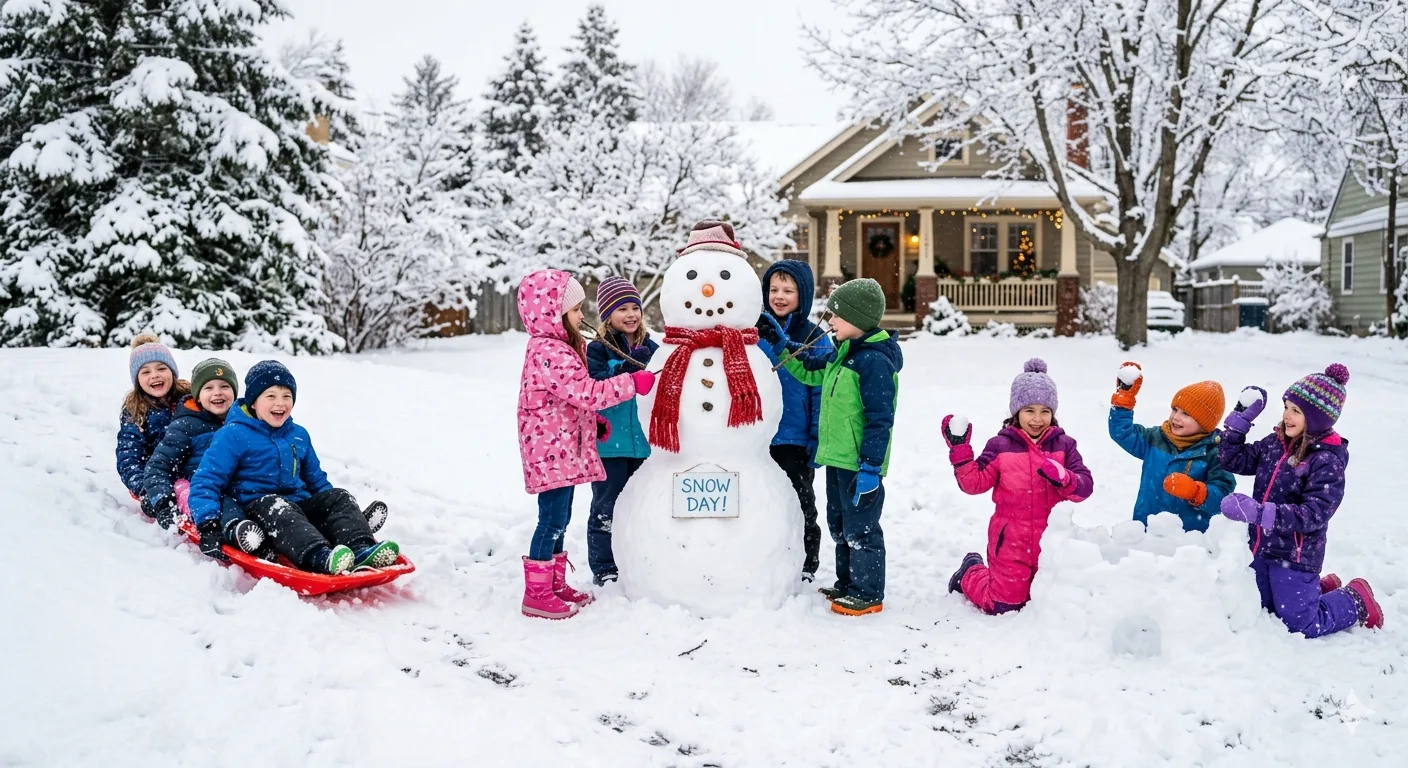
This is the real snow day headache. The seven-year-old wants to build a fort, the toddler wants to eat the snow, and the twelve-year-old thinks all of this is beneath them.
What tends to work is handing older kids a leadership role. "Head chef" or "fort architect" sounds a lot cooler to a tween than "help your little brother." Pick activities that have layers too. A scavenger hunt works for everybody if the clues have different difficulty levels. And pair an older child with a younger one for races. It balances the competition and builds patience.
If the youngest needs a nap, use that window for the bigger experiment or baking project that would be chaos with a toddler underfoot.
A Realistic Snow Day Schedule for Working Parents
If you're working while the kids are home, "just keep them busy" isn't helpful advice. A loose plan is. Adjust the times to fit your day, and treat this as a menu, not a contract.
- 8:00 AM: Bundle up the kids and send them out with a challenge card ("build the tallest tower") while you take your first calls.
- 10:00 AM: Hot cocoa and a 20-minute science project at the kitchen table.
- 11:00 AM: Independent creative time. Lay out craft supplies or a story prompt before you need quiet.
- 12:30 PM: Lunch together. Let the kids help.
- 1:30 PM: A second round outside, or an indoor obstacle course if it's too cold.
- 3:00 PM: Quiet hour with puzzles, audiobooks, or coloring.
- 5:00 PM: Cook dinner together.
- Evening: One cozy movie in blankets.
It will fall apart at some point. That's normal. If a movie sneaks in at 2 p.m. so you can finish a report, nobody is going to be harmed.
What If It's a Remote Learning Day?
A lot of districts now use e-learning days instead of full closures, so your child may be logging in from the kitchen table while snow piles up outside. It's annoying for them, but there's a workable way through it.
Get the lessons done first and treat a longer play block as the reward. Use ten-minute outdoor breaks between classes, since a few minutes in the cold does wonders for focus. And if you can, turn the weather into schoolwork: measure snow depth for math, write a storm report for English, study animal tracks for science.
Curious whether your own school is likely to close or go remote? Check the forecast early with a snow day prediction tool so you can plan either way.
Build a Snow Day Box Before the Next Storm
The easiest way to make snow days smoother is to prepare before they happen. Fill a plastic bin and stash it in a closet. When school closes, the hard part is done.
Put in construction paper, glue, safety scissors, markers, and glitter. Add cocoa packets, marshmallows, and sprinkles. Toss in baking soda and vinegar for experiments, a few balloons, flashlights, and painter's tape. Include spare mittens, socks, and hats, and print out a short list of favorite ideas from this article.
One more thing that works better than it should: let kids choose three activities each morning. Kids who pick their own plan stay engaged much longer than kids who are told what to do.
Same Playbook, Different Weather
Not every closure comes with pretty white snow. Freezing rain and ice can shut schools down just as quickly, and they make the outdoors a lot less inviting. On those days, our rain delay calculator helps you gauge how much wet weather is heading your way, and almost every indoor idea above works for an icy day too.
The same goes for the opposite end of the thermometer. When a summer heat wave keeps everyone off the playground, the cooking, craft, and quiet-time ideas still apply, and the heat index calculator shows how hot it actually feels once humidity gets involved.
Take a Few Photos Before It All Melts
Snow days feel huge in the moment and blur together later. Snap one photo of each finished project, whether it's a snow dragon, a batch of slime, or a plate of lopsided cookies. Write the date and a funny quote from your kid on the back of a craft. If you're the organized type, keep a small snow day journal with the snow depth, the temperature, and the best moment of the day.
In ten years, nobody will remember the wet mittens or the messy kitchen. They will remember the lopsided snow dragon.
Final Thoughts
A snow day doesn’t have to be perfect to be good. You don’t need matching gear, a kitchen or a full schedule. Just a warm drink, a few solid ideas and a mood to let the day go however it wants will take you a way.
Start outside while the snow is fresh. Watch the cold. Then mix in an experiment, a craft and something tasty. If you feel stuck come back, to this list. Pick something new.
Also Checkout :