It is 7:40 AM. One child is hunting for a missing mitten, another is sweating in a snowsuit, and the baby has a cough that was not there last night. Meanwhile, the forecast says the wind chill is well below freezing.
Sound familiar? Winter is full of decisions like these and some of them matter more than they seem. The right winter health tips for kids turn that chaos into a simple routine you can repeat every morning.
I built my snow day calculator after seeing parents in my area confused about school closures, and the same parents often asked what to do once the weather turned dangerous. This guide is my answer, built from pediatric guidance rather than guesswork.
A note: this article is general information, not medical advice. For questions about your child talk to your pediatrician or family doctor.
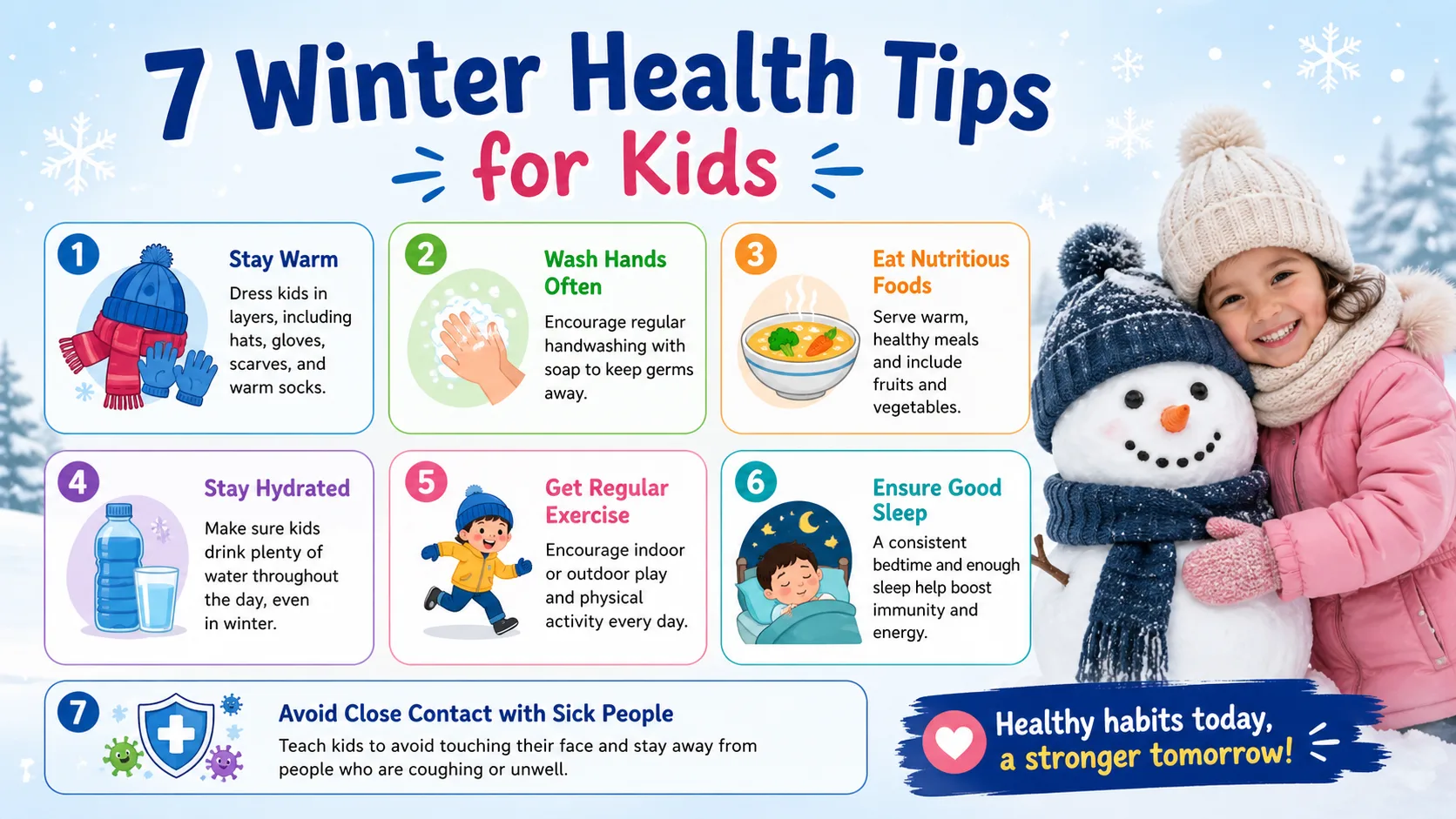
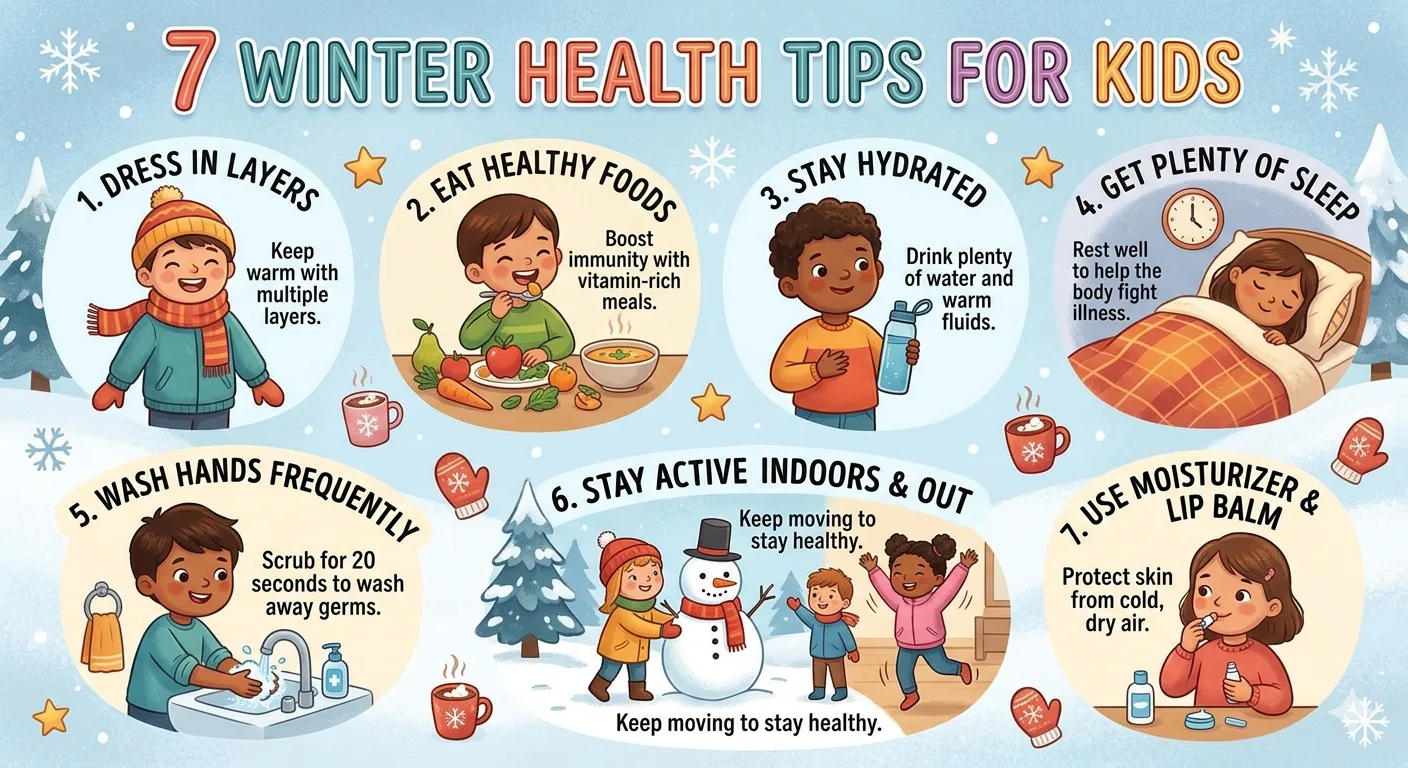
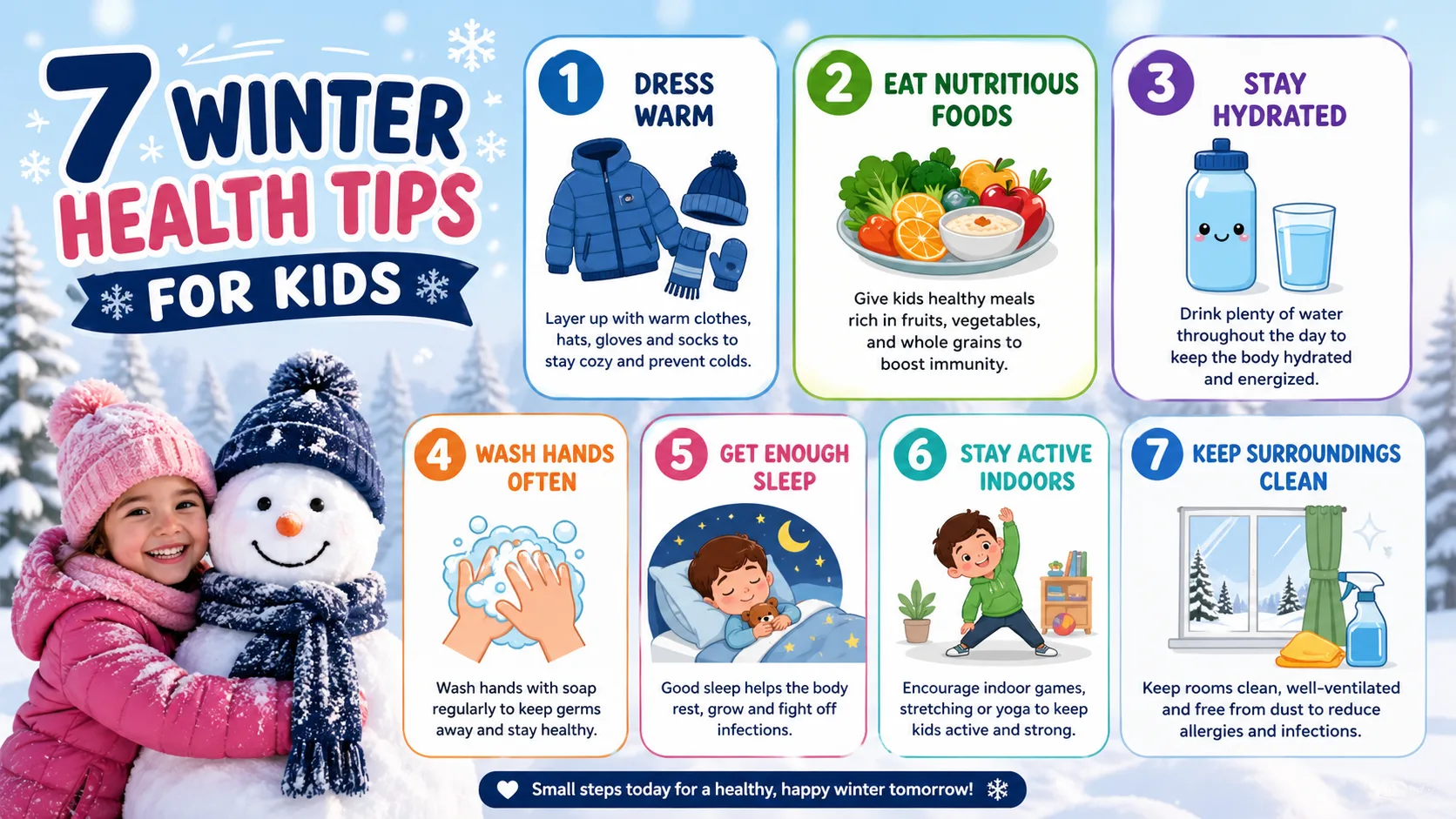
The 12 Tips at a Glance
Short on time? Here is the whole list. Each tip is explained below with the details that actually help.
- Dress children in dry, breathable layers
- Check the wind chill and know the signs of cold injury
- Take the bulky coat off in the car seat
- Get the 2026 to 2027 flu, COVID-19, and RSV protection sorted
- Protect sleep and wash hands often
- Keep kids hydrated, even when they do not feel thirsty
- Use sunscreen and eye protection on snowy days
- Fight dry air and dry skin
- Make home heating safe
- Play safe: helmets, sleds, and thin ice
- Look after your child's winter mood
- Keep nutrition and movement going
Why Children Feel Winter Harder Than Adults
Children have more skin surface compared with their body size, so they lose heat faster. Their hands and feet are small and cool quickly. And when they are absorbed in play, they often do not notice they are cold until they are really cold.
That is why a child who says "I'm fine" in the snow may need a warm-up break anyway. Your job is to notice what they do not.
Tip 1: Dress Children in Dry, Breathable Layers
The goal is warm and dry, not just warm. Moisture is the real enemy, because wet skin and wet clothes pull heat away fast.
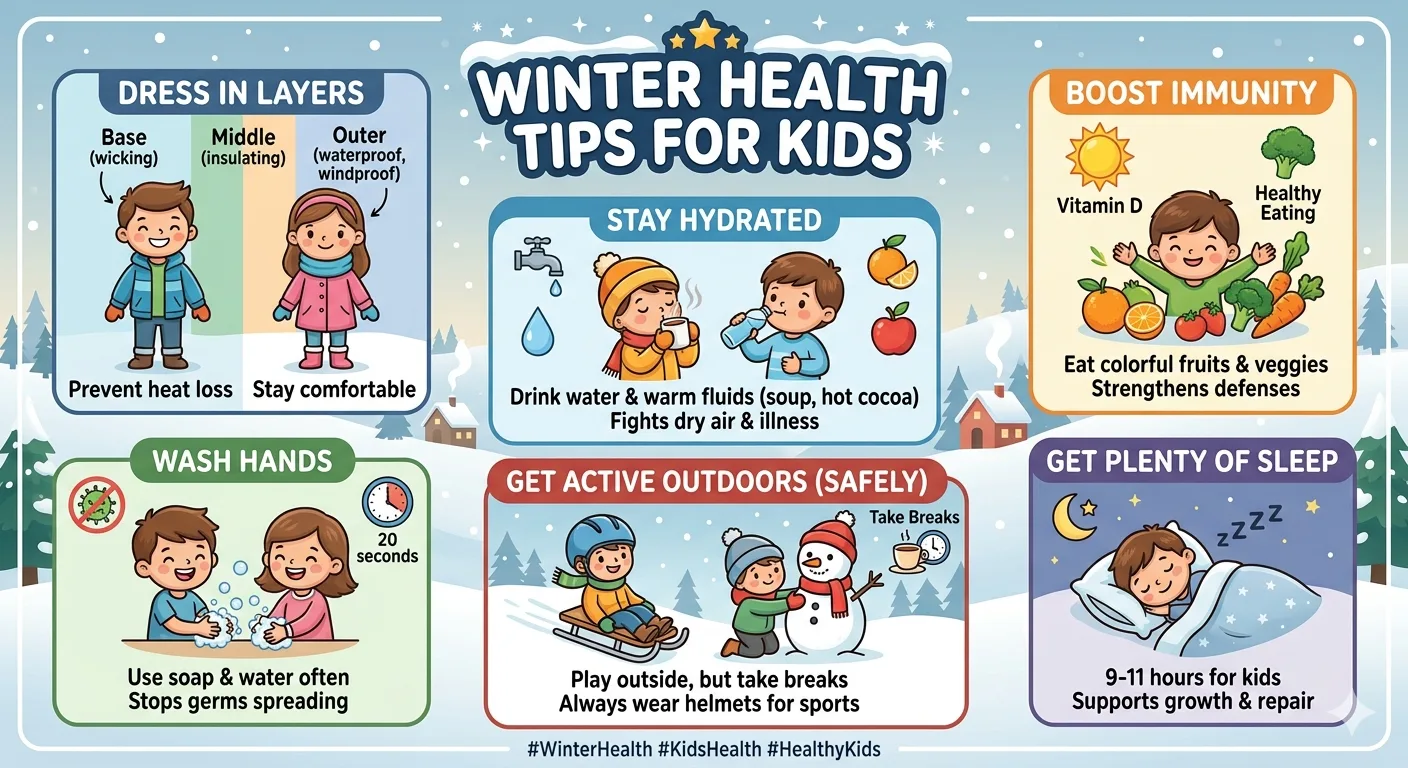
Use the three-layer system for older children:
- Base layer: A snug thermal top and leggings that pull moisture away from the skin. Wool or synthetic fabrics work better than cotton, which stays wet.
- Middle layer: Fleece, wool, or a light puffy layer to trap warm air.
- Outer layer: A waterproof, windproof jacket and snow pants.
Then finish with the pieces that people forget: a warm hat, waterproof mittens, insulated waterproof boots with dry socks, and a neck warmer or scarf pulled up over the cheeks on windy days. Mittens beat gloves for small children because fingers stay together and share heat.
For babies and young toddlers, a common pediatric rule of thumb is one more layer than an adult would wear in the same conditions. Just do not overdo it, and take layers off indoors.
A myth worth dropping
You may have heard that most of your body heat escapes through your head. It does not. Heat loss follows how much skin is exposed. A hat matters because heads are often uncovered, not because heads are special. Cover everything and you are covered.
The neck check
Slide a hand to the back of your child's neck. Warm and dry is right. Sweaty means remove a layer. Cool means add one.
Wet weather deserves its own plan. On rainy or slushy days, pack spare socks and mittens, because damp feet and hands are the quickest route to cold injury. If you want to plan around rain for outdoor events the rain delay calculator can help you judge how a downpour might disrupt the day.
Tip 2: Check the Wind Chill and Know the Signs of Cold Injury
The air temperature alone does not tell you how cold it feels on bare skin. Wind chill does. The National Weather Service gives a clear example: at 0°F with a 15 mph wind, the wind chill is about -19°F, and exposed skin can freeze in roughly 30 minutes.
That 30-minute figure comes from tests on adults so for children treat it as an estimate, not a safe window. Before you head out, check the real "feels like" number with the wind chill calculator.
How long is too long?
There is no single safe number of minutes for children outdoors in the cold. Many child care programs use a color-coded weather watch chart based on wind chill. They shorten or skip outdoor play as the numbers drop.
Here is a cautious way to think about it:
-
Mild cold: Normal play with layers, plus warm-up breaks.
- Cold and windy: Shorter sessions, more checks, extra attention to cheeks, ears, fingers, and toes.
- Dangerously low wind chill: Keep play indoors. Your school's own weather policy takes priority.
Babies and toddlers need even more caution. They cannot tell you they are cold.
Frostbite: what to look for and what to do
Frostbite shows up most on cheeks, nose, ears, fingers, and toes. Early signs are cold, tingling, or painful skin. True frostbite looks pale, white, or waxy, and feels hard and numb.
If you suspect it:
- Get your child indoors and out of wet clothing.
- Rewarm with warm, not hot, water at about 104°F to 108°F (40°C to 42°C), if there is no chance the skin will freeze again.
- Do not rub the skin or use snow. Do not use a heating pad, fireplace, or radiator, because numb skin burns easily.
- Do not break any blisters.
- Call your doctor, or seek urgent care, if the skin looks white, hard, or blistered, or if feeling and color do not return after about an hour of rewarming.
Hypothermia: the emergency
Hypothermia means the body's core temperature drops below 95°F (35°C). Look for shivering, slurred speech, clumsiness, confusion or unusual sleepiness. In babies, the skin may be cold and pale, and they may be very quiet and not feed well.
Call emergency services (911 in the US and Canada, 999 in the UK). While you wait, move your child out of the wind, take off wet clothes, wrap them in dry blankets, and warm the chest and core first. If they are fully awake and can swallow, a warm drink is fine. Handle them gently and do not rub their limbs.
Tip 3: Take the Bulky Coat Off in the Car Seat
This one catches many families out. A thick winter coat compresses in a crash and leaves slack in the harness, which can be dangerous. Children's hospitals and car seat safety groups give the same advice: no puffy coats under the harness.
- Take the coat off before buckling in.
- Buckle your child in wearing thin layers, like a sweater or fleece.
- Tighten the harness until you cannot pinch any slack of webbing at the shoulder.
- Lay a blanket or the coat, turned backward, over the top of the harness.
Pre-warming the car for a few minutes also helps, though never leave a child alone in a running vehicle.
Tip 4: Sort Out the 2026 to 2027 Flu, COVID-19, and RSV Protection
Respiratory season is starting now, and the recommendations were refreshed for 2026 to 2027. Here is what the American Academy of Pediatrics (AAP) currently advises. Check with your doctor, because advice differs by country and by child.
- Flu vaccine: Recommended every year for all children 6 months and older without a medical reason to skip it. Some children from 6 months to 8 years need two doses, so ask your doctor. Aim to finish by the end of October, though a later shot still helps.
- Why it matters: The AAP described the 2025 to 2026 flu season as high severity, with 190 pediatric deaths. A CDC study reported by the AAP found flu vaccination cut the risk of flu death in children and teens by about 80%.
- RSV protection for babies: The AAP recommends RSV immunization (nirsevimab or clesrovimab) for infants under 8 months born during or entering their first RSV season, unless the pregnant parent had the RSV vaccine. For 2026 to 2027, the high-risk criteria were widened for children aged 8 to 19 months entering a second season.
- COVID-19: The AAP recommends the 2026 to 2027 vaccine for all infants 6 to 23 months and for older children at higher risk.
Two helpful points. First, the RSV antibody is not a vaccine and does not protect against flu, so it is a separate step. Second, flu, COVID-19, and RSV protection can usually be given at the same visit.
In the UK, children are usually offered the flu vaccine through the NHS programme, often as a nasal spray. Your school, GP, or health authority will tell you how and when.
Tip 5: Protect Sleep and Wash Hands Often
Cold air does not cause colds or flu. Viruses do, and winter just puts everyone closer together indoors. So the best defenses are boring ones.
-
Handwashing: Wash with soap for least 20 seconds before eating after school after blowing noses and after using shared spaces. Humming "Happy Birthday" twice is a reliable timer.
- Sleep: School-age children generally need 9 to 12 hours, and teenagers 8 to 10. Tired kids get sick more easily and recover more slowly.
- Sick-day rules: Teach children to cough into an elbow, avoid sharing cups, and stay home when they are really unwell.
Tip 6: Keep Kids Hydrated, Even When They Are Not Thirsty
Children often drink less in winter, and they lose moisture with every breath of cold, dry air. Dehydration makes children tired, grumpy, and more miserable when they are ill.
Make it easy:
- Offer water before, during, and after outdoor play.
- Pack a thermos of warm water or very diluted juice for school.
- Serve water-rich fruit like oranges, clementines, and grapes.
- Try warm soups and broths. Honey in warm drinks is fine for children over 12 months only, and never for babies.
If your child has vomiting or diarrhea ask your pharmacist. Doctor about an oral rehydration solution, which is generally preferred over sports drinks. Call your doctor if you see lips and mouth no tears when crying, sunken eyes, unusual sleepiness or noticeably fewer wet diapers or bathroom trips.
Tip 7: Use Sunscreen and Eye Protection on Snowy Days
It feels strange, but winter sun can burn. Fresh snow reflects up to about 80% of UV rays, so exposure from above and below adds up, especially at higher altitudes and on bright days.
- Use broad-spectrum sunscreen of SPF 30 or higher on the face, ears, and any exposed skin.
- Reapply about every two hours, and after heavy sweating.
- Use lip balm with SPF.
-
Wear sunglasses or snow goggles to protect against glare and snow blindness.
- For babies under 6 months, keep them out of direct sun and use shade and clothing instead of sunscreen.
Clouds do not block all UV rays so do not skip it on days.
Tip 8: Fight Dry Air and Dry Skin
Heated indoor air is dry, and cold wind is rough on skin. The result is chapped lips, cracked hands, itchy patches, and eczema flares.
- Keep baths short and lukewarm.
- Moisturize within a few minutes of bathing, using a fragrance-free cream or ointment.
- Use lip balm and apply it before heading outdoors.
- Dry wet skin gently, and change out of damp clothes quickly.
A humidifier can ease dry nasal passages and night-time coughing. Only if you use it correctly. Aim for indoor humidity of roughly 30% to 50%. Clean it as the maker instructs, and change the water daily, since a dirty humidifier can spread mold or bacteria. If eczema becomes red, weepy, or sore, see your doctor.
Tip 9: Make Home Heating Safe
Winter brings space heaters, fireplaces, and sometimes generators, and these bring real risks. Carbon monoxide is odorless and can be deadly so detectors are not optional.
- Put carbon monoxide alarms on every level of your home and near sleeping areas. Test them monthly.
- Keep space heaters at least 3 feet away from anything that can burn, and never leave them on while sleeping or unattended.
- Never use a grill, camp stove, or generator indoors or in a garage, and never run a car in a closed garage.
- After heavy snow, clear snow away from furnace vents, dryer vents, and car tailpipes.
- Do not use an oven to heat the house.
For babies, overheating is also a risk. Use a sleep sack instead of loose blankets, and keep the room comfortably cool.
Tip 10: Play Safe: Helmets, Sleds, and Thin Ice
Winter play is great for kids, and a few simple rules keep it fun.
- Helmets: Wear a sport-specific helmet for skiing, snowboarding, and skating. Many sledding injuries are also head injuries, so consider one for sledding too.
- Sledding: Sit up and go feet first, never head first or lying down. Pick a hill that is far from roads, trees, fences, and water, and keep an adult nearby.
- Snowmobiles: AAP guidance says children under 16 should not drive them and children under 6 should not ride them.
- Ice: Stay off frozen ponds and rivers unless local officials say the ice is safe.
- Warm-up breaks: Build in regular trips indoors, more often when it is windy or clothes get wet.
Tip 11: Look After Your Child's Winter Mood
Short days and less outdoor time can affect how children feel. Clinical seasonal depression is more often diagnosed in adults, but children can show lower mood, tiredness, irritability, and withdrawal in winter, too.
Watch for changes that last than two weeks like persistent sadness, lost interest in favorite activities big changes in sleep or dropping school performance. If you see them, talk to your pediatrician.
What helps:
- Get outside in daylight when it is safe, even for a short walk.
-
Keep routines for sleep, meals and activity.
-
Plan fun winter things, like sledding, baking and games.
-
Stay connected with friends and family through visits or video calls.
- Make time to talk, and listen before you try to fix.
If your child ever talks about hurting themselves treat it as urgent. In the US or Canada. Text 988. In the UK you can contact Samaritans on 116 123. Use emergency services if there is immediate danger.
Tip 12: Keep Nutrition and Movement Going
No single food will make a child immune to illness, but regular, balanced meals help kids stay energetic and recover well. Winter makes warm, simple food easy.
- Soups and stews with vegetables and protein
- Oatmeal for breakfast with fruit
- Citrus fruits, which are in season
- Root vegetables like carrots and sweet potatoes
Ask your pediatrician about vitamin D, especially for babies, for children with limited sun exposure, and for those with darker skin living in northern places. Do not start supplements on guesswork.
On days when it is too cold to play outside, keep bodies moving indoors:
- Dance parties and freeze dance
- Indoor obstacle courses made from cushions
- Kids yoga or stretching videos
- Classic games like Simon Says and treasure hunts
When to Call the Doctor or Emergency Services
Most winter illnesses pass with rest and fluids. These signs mean you should not wait.
Call emergency services right away for:
- Trouble breathing, very fast breathing, ribs pulling in with each breath, or blue or gray lips
- Signs of hypothermia, or frostbite that looks severe
- A child who is hard to wake, confused, or limp
- A seizure, or suspected carbon monoxide poisoning
Call your doctor the same day for:
- Any fever of 100.4°F (38°C) or higher in a baby under 3 months
- Signs of dehydration
- A fever lasting more than three days, or ear pain that does not settle
- Wheezing or a cough that is getting worse
Snow Days and Cold Mornings: A Simple Plan
Many winter health problems start with a rushed morning. A little planning prevents most of them.
The night before:
- Check the forecast and the wind chill for the morning.
- Lay out layers, boots, hats, and two pairs of mittens.
- Charge phones and turn on your school's alerts.
- Run a closure estimate with the snow day calculator so you can line up childcare or work flexibility.
The morning of:
- Wait for your school's official message. In my opinion no calculator can replace the school district announcement.
- If school is open on a bitterly cold day, send extra layers and a spare pair of mittens.
-
If school is closed plan indoor activities and short outdoor sessions with breaks.
Beyond Winter: Keep Using Weather as Your Guide
These habits do not end in spring. Checking conditions before outdoor play works in every season. When temperatures climb, the heat index calculator hows how hot it feels once humidity is included, which is a check, before sports and playground time.
Conclusion: Small Habits, Big Protection
Healthy winters are built from small, repeatable things: dry layers, a quick wind chill check, a safely buckled car seat, up-to-date vaccines, good sleep, plenty of fluids, and a home that is warm and safe. None of it is complicated, and all of it adds up.
Pick two or three tips from this list to start with this week. Once they are routine, add the next ones. And keep an eye on your child's mood and energy, because those often tell you something is off before anything else does.
Also Checkout :