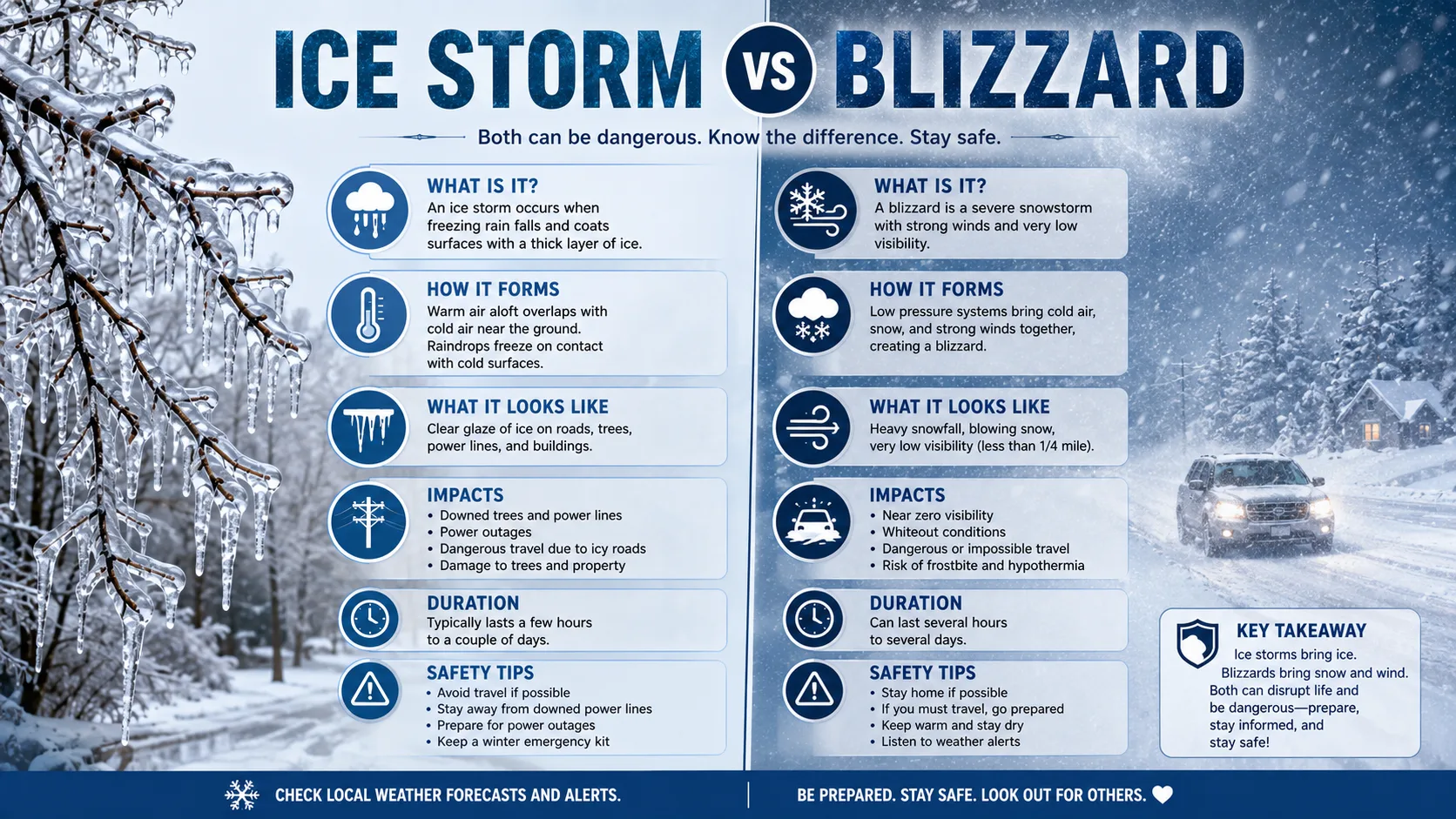
The core difference in the ice storm vs blizzard comparison comes down to precipitation type and formation, not just severity. A blizzard is officially defined by wind and visibility, sustained winds of 35 mph or more combined with blowing or falling snow that cuts visibility to a quarter mile or less, for at least three hours. An ice storm, by contrast, is defined by accumulation: at least a quarter inch of freezing rain coating everything it touches in a smooth layer of ice.
They're both dangerous winter events, but they threaten you in almost opposite ways. A blizzard is a wind and snow problem, it buries roads, creates whiteout conditions, and strands vehicles. An ice storm is a weight and power problem, it snaps tree limbs and power lines under the sheer weight of accumulated ice, often knocking out electricity for days. Understanding which one you're actually facing changes how you should prepare.
What Is a Blizzard? The Official Definition
According to the National Weather Service, a blizzard isn't defined by how much snow falls. It's defined entirely by wind and visibility. A blizzard means sustained wind or frequent gusts of 35 miles per hour or greater, combined with considerable falling and/or blowing snow that reduces visibility to less than a quarter mile, and these conditions must persist for three hours or longer.
That's a detail most people get wrong. You can technically have blizzard conditions with only a couple of inches of snow on the ground, as long as the wind is strong enough to whip that snow into whiteout conditions. Some blizzards, known as ground blizzards, don't involve any new snow falling at all, just existing snow being lifted and blown by high winds.
| Requirement | Threshold |
|---|---|
| Sustained wind or frequent gusts | 35 mph or greater |
| Visibility | 1/4 mile or less |
| Duration | 3 hours or longer |
| Minimum snowfall requirement | None, wind and visibility are the only criteria |
| Severe blizzard variant | Winds above 45 mph and temperatures below 10°F |
What Is an Ice Storm? The Official Definition
An ice storm is defined by accumulation rather than wind. The National Weather Service classifies an event as an ice storm when freezing rain produces a significant, and possibly damaging, accumulation of ice, normally a coating of at least a quarter inch, though the threshold can extend up to half an inch if winds stay below 15 mph.
Unlike a blizzard, an ice storm doesn't require strong wind at all. In fact, calm conditions often make ice storms worse, since there's nothing to knock accumulating ice off tree branches and power lines before the weight becomes structurally dangerous.
How Each Storm Actually Forms
The difference between these two storms starts high above the ground, in the vertical temperature structure of the atmosphere.
How a Blizzard Forms
A blizzard forms when a strong area of low pressure pulls in cold air and pairs it with intense, sustained wind. The entire atmospheric column, from the ground up through the clouds, generally stays below freezing, so precipitation falls and stays as snow. The defining ingredient isn't the cold itself, it's the wind speed strong enough to actively blow that snow horizontally and destroy visibility.
How an Ice Storm Forms
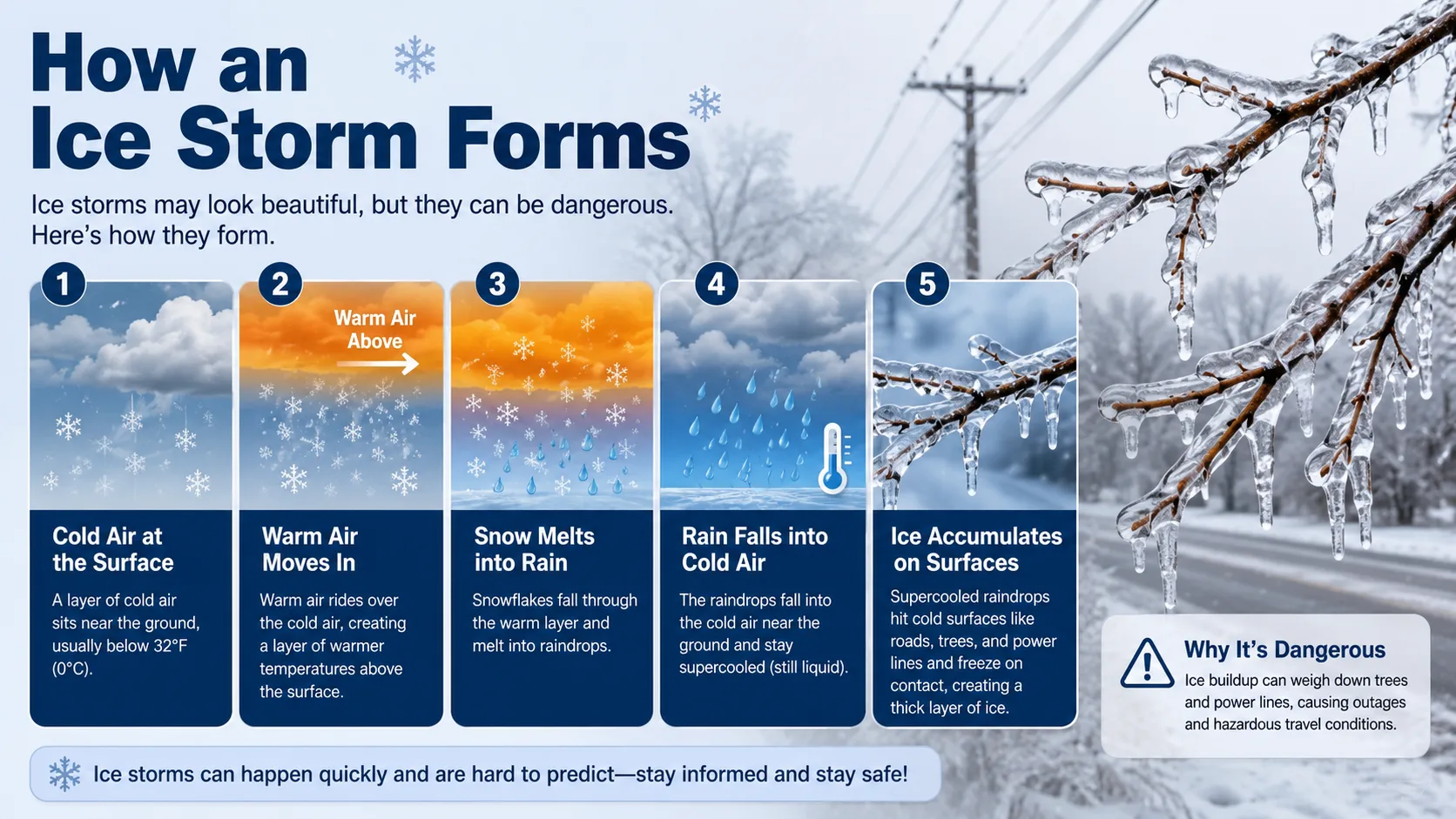
Ice storms require a much more specific setup called a temperature inversion. Cold air sits at ground level, but a layer of warmer air is wedged in above it. Snow or ice crystals falling from the clouds pass through that warm layer and completely melt into rain, then continue falling through the shallow layer of subfreezing air near the surface without refreezing. When those supercooled raindrops hit the ground, trees, or power lines, they freeze instantly on contact, creating a smooth glaze of ice.
If that near-surface cold layer is too thick, the raindrops refreeze before reaching the ground and fall as sleet instead, which bounces rather than glazes. That's the key difference between sleet and freezing rain, and it's also why ice storms tend to occur in a fairly narrow temperature and geographic band compared to blizzards.
| Factor | Blizzard | Ice Storm |
|---|---|---|
| Vertical temperature profile | Below freezing throughout the atmosphere | Warm layer aloft (inversion) between two cold layers |
| Precipitation type | Snow | Freezing rain |
| Key driver | Sustained high wind | Precise temperature layering, wind is not required |
| Worsened by calm winds? | No, wind is the defining hazard | Yes, calm air lets ice build up undisturbed |
Ice Storm vs Blizzard: Full Side-by-Side Comparison
| Category | Blizzard | Ice Storm |
|---|---|---|
| Defining criteria | Wind 35+ mph, visibility under 1/4 mile, 3+ hours | 1/4 inch or more ice accumulation |
| Primary hazard | Whiteout conditions, stranded travelers | Downed trees and power lines |
| Typical duration | Hours to about a day | A few hours to several days |
| Aftermath duration | Usually clears within days as snow is plowed | Power and cleanup effects can last weeks |
| Road danger | Zero visibility, deep drifts | Invisible glare ice, extremely low traction |
| Structural risk | Roof collapse from heavy snow load | Trees and power lines collapsing from ice weight |
Which One Is More Dangerous?
This is less about which storm is "worse" in general and more about which specific hazard threatens you most. Both can be lethal, but through very different mechanisms.
Why Ice Storms Are So Damaging
Ice is deceptively heavy. Just half an inch of ice accumulation can add hundreds of pounds of extra weight to power lines and tree limbs, and in extreme cases, ice accumulation can increase a tree branch's effective weight by up to a hundred times its normal load. That weight is what causes the widespread, prolonged power outages ice storms are known for.
The danger doesn't end when the ice stops falling. Extended power outages during freezing temperatures create secondary risks: hypothermia from lost heat, and carbon monoxide poisoning from improperly used generators or heaters brought inside to compensate.
Why Blizzards Are So Dangerous
Blizzards kill primarily through exposure and impaired visibility. Whiteout conditions strand drivers on highways, sometimes for many hours, and hypothermia becomes a real risk for anyone caught outside or in a stalled vehicle without proper preparation. Heavy, wind-driven snow can also collapse roofs under accumulated weight, particularly on flat or poorly maintained structures.
Real-World Examples That Show the Difference
The Great Ice Storm of January 1998
One of the most devastating ice storms in North American history struck eastern Ontario, southern Quebec, and parts of the northeastern United States in January 1998. The storm knocked out power to roughly 4 million customers at its peak and caused an estimated 5 to 7 billion dollars in damage, with combined fatalities in Canada and the United States reaching around 44 people, many from indirect causes like carbon monoxide poisoning during the extended outages.
The December 2008 Northeastern Ice Storm
A smaller but still severe ice storm hit the Northeastern United States in December 2008, cutting power to as many as 1.7 million customers at its peak. More than a week later, over 100,000 customers were still without electricity, illustrating how long ice storm recovery can stretch compared to a typical snowstorm.
The Great Blizzard of 1888
By contrast, the Great Blizzard of 1888 remains one of the deadliest blizzards in American history, a pure wind-and-snow event. Over three days in March 1888, as much as 50 to 58 inches of snow fell across parts of the Northeast, with wind gusts reaching 80 mph, and the storm killed more than 400 people, many of them buried in massive snowdrifts in New York City alone.
The Blizzard of 1978
A powerful blizzard struck the Northeast on February 6-7, 1978, producing hurricane-force winds and heavy snow that stranded thousands of vehicles and left hundreds of thousands without power, a reminder that severe blizzards can create ice-storm-like power outages too, just through a different mechanism.
| Event | Type | Key Impact |
|---|---|---|
| January 1998 Ice Storm | Ice Storm | ~4 million without power; $5–7 billion in damage |
| December 2008 Northeast Ice Storm | Ice Storm | ~1.7 million without power at peak |
| Great Blizzard of 1888 | Blizzard | 400+ deaths; 50+ inches of snow in parts of the Northeast |
| Blizzard of 1978 | Blizzard | Hurricane-force winds; thousands of stranded vehicles |
How to Prepare Differently for Each Storm
Ice Storm Preparation
- Charge devices and stock flashlights and batteries before the storm, since extended power outages are the primary risk.
- Never run a generator indoors or in a garage, even with doors open, due to carbon monoxide risk.
- Park vehicles away from large trees and power lines, since ice-laden branches can snap without warning.
- Keep the refrigerator and freezer closed as much as possible during an outage to preserve food longer.
- Have an alternate heat source and fuel plan, since outages from severe ice storms can last days to weeks.
Blizzard Preparation
- Avoid unnecessary travel entirely once blizzard conditions begin, since whiteout visibility makes driving genuinely life-threatening.
- Keep an emergency kit in your vehicle if travel is unavoidable, including blankets, food, water, and a charged phone.
- Clear snow from roof areas if safely possible, particularly on flat or aging roofs, to reduce collapse risk.
- Stock food and water for several days, since roads may be impassable even after snowfall stops.
- Check on elderly neighbors, since blizzard-related hypothermia disproportionately affects older adults and those without reliable heating.
Read More : Snowiest Cities in America
Similarities Between Ice Storms and Blizzards
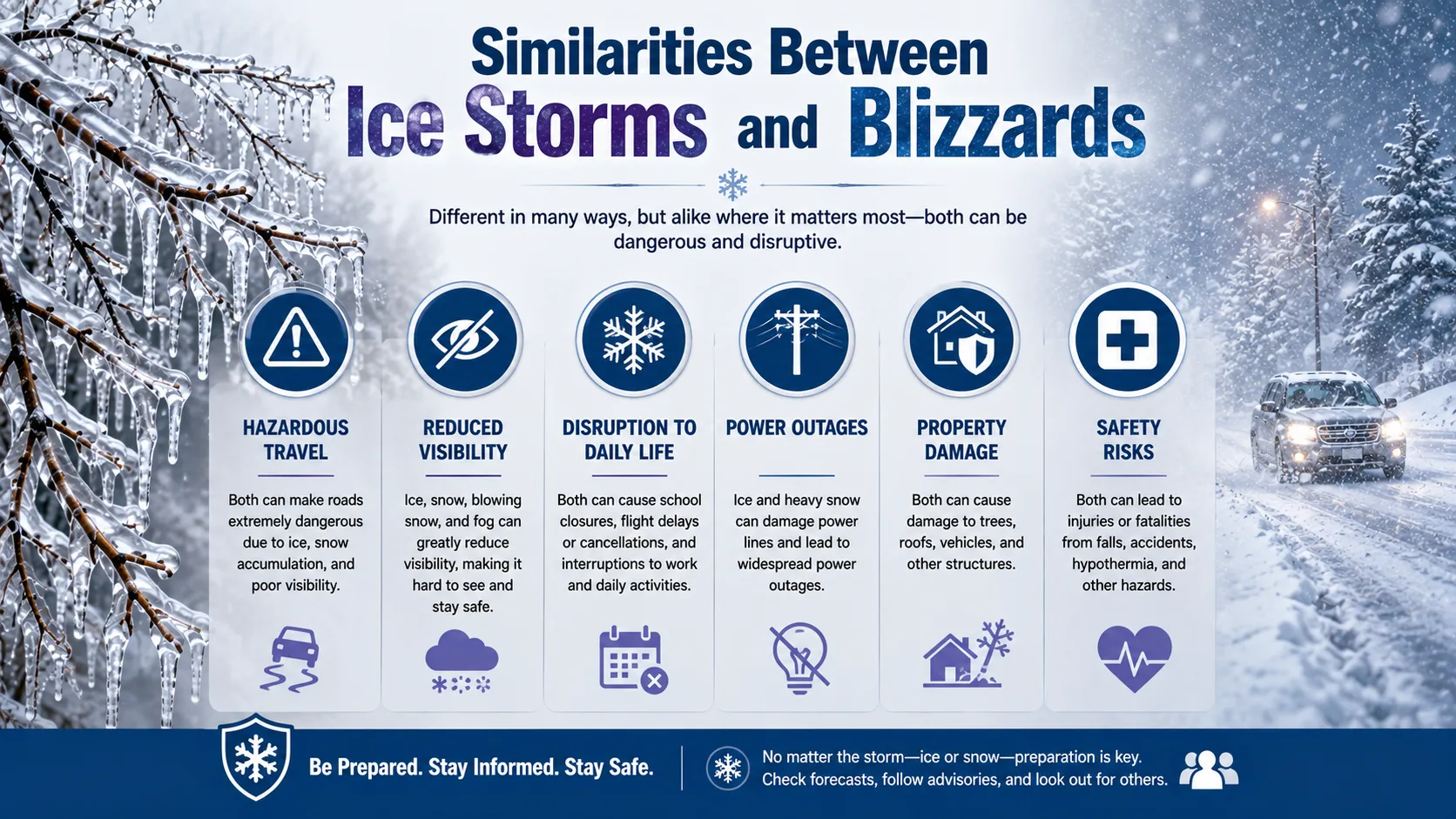
Despite their differences, the two storms share some real overlap:
- Both are issued as official warnings by the National Weather Service when specific measurable thresholds are met
- Both can cause widespread power outages, though through different mechanisms
- Both make road travel extremely dangerous, even if the specific hazard, ice glare versus whiteout, differs
- Both can occur as part of the same broader winter storm system, with one region seeing blizzard conditions while a nearby region sees freezing rain
- Both require the same basic emergency supplies: food, water, heat source, and a way to charge devices
Common Misconceptions
- "A blizzard means a huge amount of snow." Not necessarily. The official definition is entirely about wind and visibility, not snowfall totals.
- "Ice storms are less dangerous because there's less precipitation." False. Ice storms are responsible for some of the most expensive and widespread power outages in North American history.
- "Calm weather during winter precipitation is automatically safer." Not for ice storms. Calm conditions often make ice accumulation worse, since nothing knocks the ice off branches and lines.
- "Sleet and freezing rain are the same thing." They're not. Sleet refreezes before hitting the ground and bounces; freezing rain stays liquid until impact and glazes on contact.
Conclusion
The ice storm versus blizzard comparison ultimately comes down to two very different atmospheric setups producing two very different threats. A blizzard is a wind-driven whiteout event that endangers anyone caught traveling. An ice storm is a slow, heavy accumulation event that endangers infrastructure and anyone left without power in freezing temperatures. Knowing which one is headed your way, and preparing for its specific hazards rather than generic "winter storm" advice, is the real difference between weathering the storm comfortably and being caught off guard.
Also Checkout :