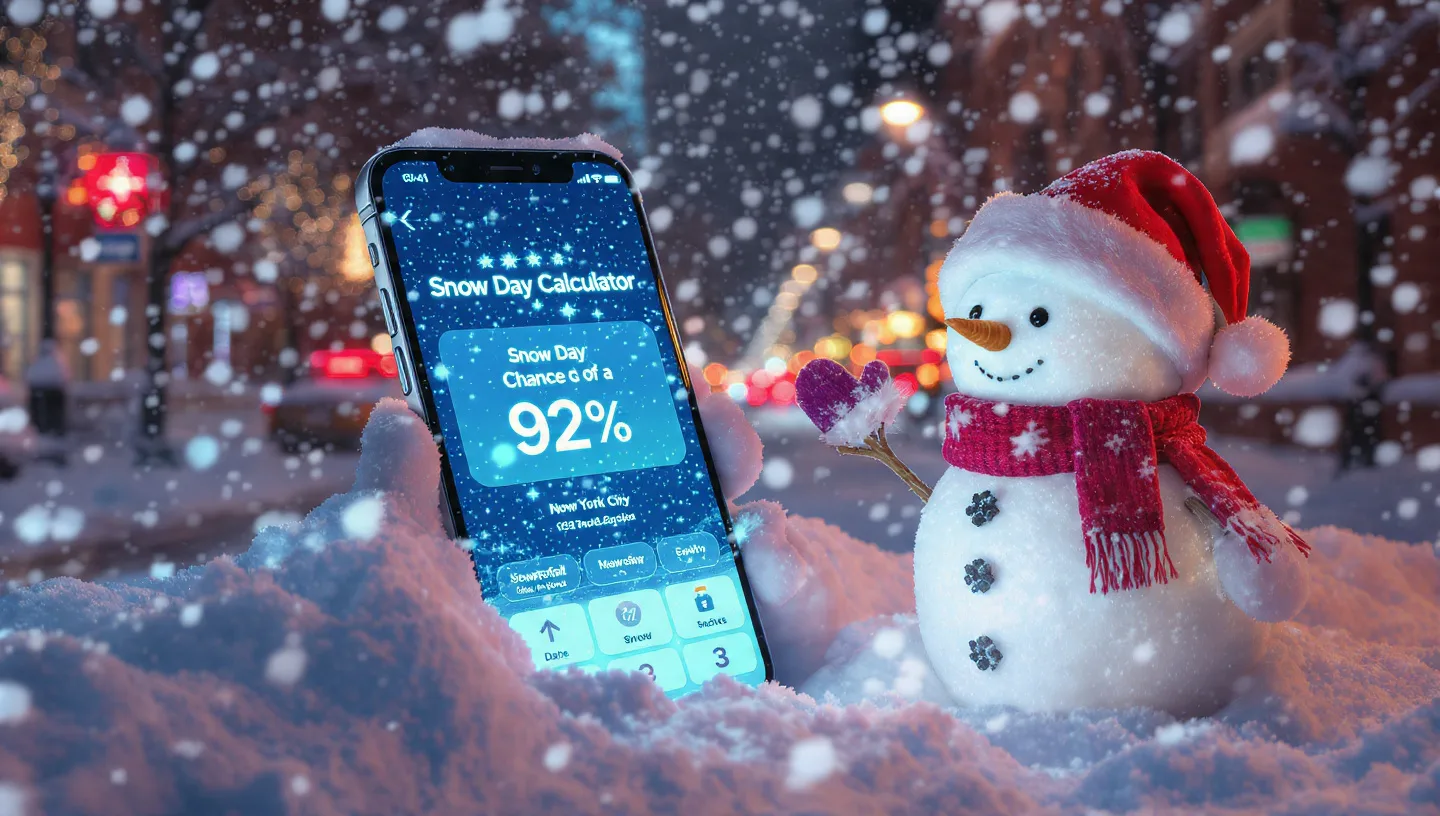
It is 9:40 on a Sunday night. The forecast says storm. Your phone is buzzing with group chats. Nobody in the house can agree on whether tomorrow will be a snow day.
If you live in New York guessing whether tomorrow will be a snow day is harder than it looks. Winter students in New York City received a full old-fashioned snow day for the first time since 2019. A storm weeks earlier had sent them home with remote learning instead. Meanwhile parts of Western New York barely saw a foot of snow.
A snow day calculator turns a weather forecast into a probability that a snow day will happen or that school will open late. Think of it as an estimate, not a promise. If you want a read on tomorrow run your ZIP code through a snow day calculator and then use the rest of this article to interpret the number.
What a Snow Day Calculator for New York Actually Tells You
A snow day calculator turns a weather forecast into a rough probability that school will close or open late. Think of it as a smart estimate, not a promise. If you want a quick read on tomorrow, you can run your ZIP code through our snow day calculator and then use the rest of this article to interpret the number.
The best tools weigh several things at once, not just the snowfall total:
- Snowfall amount and rate. Four inches over twelve hours is a nuisance. Four inches in two hours is a problem.
- Ice and freezing rain. A thin glaze can shut down more districts than a full foot of powder.
- Temperature and wind chill. Dangerous cold can close schools even on a dry day.
- Timing. Snow that ends at 2 AM gives plow crews time to work. Snow that peaks at 7 AM does not.
- Forecast confidence. A sure 5 inches and a maybe 5 inches are two different situations.
- Local behavior. How your district, and districts like yours, have reacted to similar storms in the past.
That last item is where New York gets interesting, because "local" varies wildly across the state.
Why New York Is Really Five Different Snow Day Systems
Most people treat the state as one big region. It is not. Infrastructure, climate, school size and closure philosophy change dramatically as you travel from the Atlantic coast to the Great Lakes. Here is how it breaks down.
New York City: It Is No Longer Just About Inches
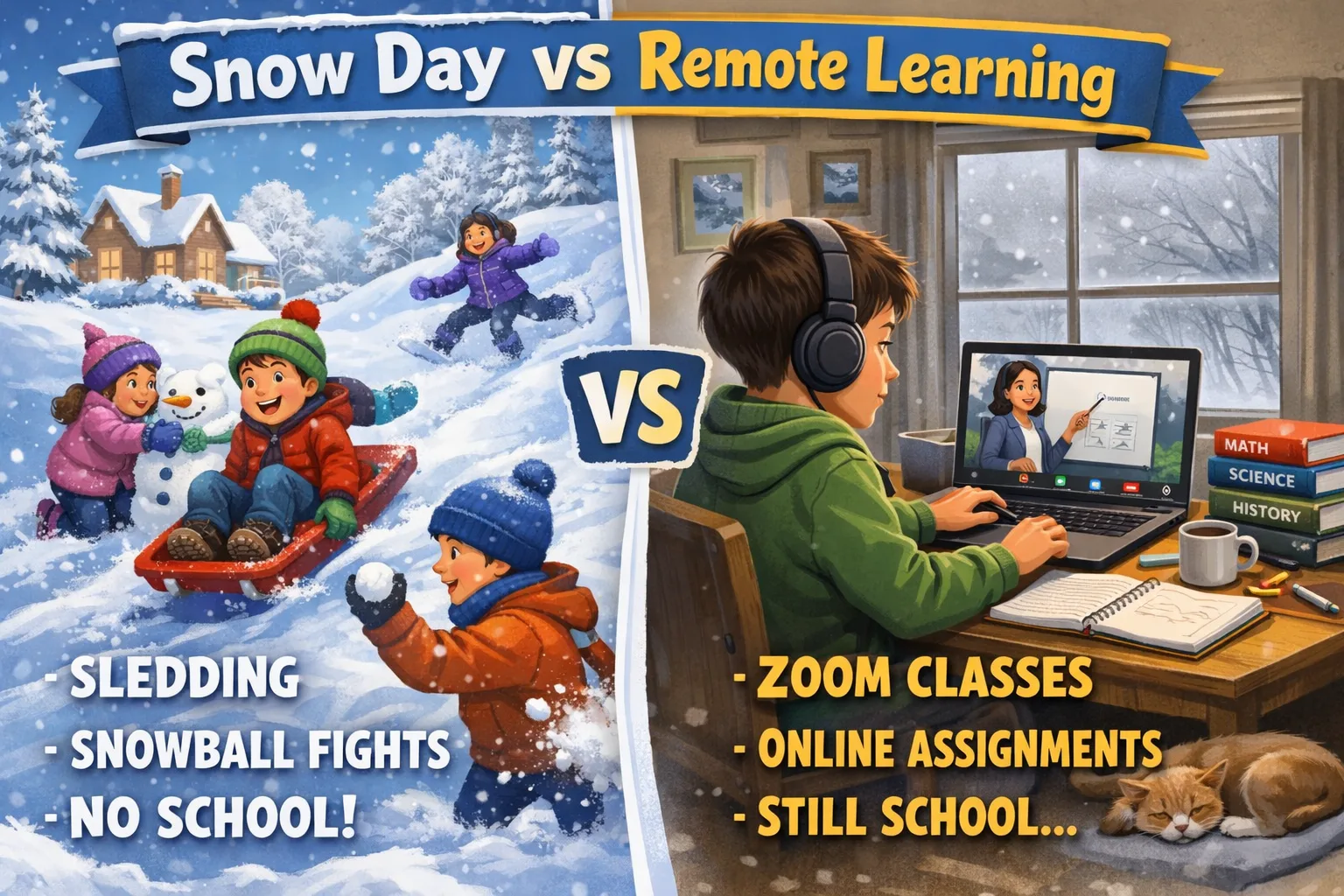
For years, New York City did not have traditional snow days at all. The school system switched to remote learning on storm days, largely because the calendar is packed with holidays and the state requires 180 instructional days.
That changed in February 2026. Ahead of a blizzard forecast to drop 16 to 24 inches the mayor announced a snow day with no remote learning. The announcement was backed by a state waiver, a state of emergency and a travel ban from 9 PM Sunday to noon Monday. The storm delivered 16 to 19 inches across most of the city with eastern Staten Island receiving 24 inches. Schools reopened on Tuesday even though than 150,000 people signed a petition asking for one more snow day.
What does that mean for you? If you are using a snow day calculator for NYC read the result with three outcomes in mind:
- Normal in-person school, which is the default for most storms.
- A remote learning day, which is the most likely outcome for a moderate to heavy storm.
-
A true snow day, which now requires something close to a blizzard and an emergency declaration.
Snow totals matter,. The decisive factors in the five boroughs are transit disruption, road conditions for buses and whether the city has declared an emergency. The mayors office and the citys school announcements are the word on a snow day.
Long Island and the Lower Hudson Valley: Bus Country
Suburban districts do not have a subway to fall back on. Nearly every student rides a school bus or gets a ride from a parent, so road conditions on neighborhood streets and back roads carry enormous weight.
As a rule of thumb, districts here are among the more closure-prone in the state. A few inches of wet, heavy nor'easter snow falling during the morning commute can be enough for a delay or closure. Private schools often decide independently and sometimes close before the public district does.
The Capital Region and Mid-Hudson: Ice Is the Wildcard
Albany and the surrounding counties see a blend of coastal storms and inland cold-air events. Snow is manageable for these districts. Ice is not.
A layer of freezing rain that arrives before the snow does is a setup for a delay or closure. It locks pavement in place before plows can do their job. When you check a calculator for this part of the state, look closely at the ice probability, not just the snow total.
Buffalo, Rochester and Syracuse: The Snowbelt Mindset
This is where expectations flip. Buffalos 30-year snowfall normal is 95 inches a year. Rochester typically sees around 100 inches. Syracuse regularly tops 120 inches. The Tug Hill Plateau east of Lake Ontario can pile up 200 inches or more in a season.
When that is normal life, a district that closed for every 6-inch storm would barely open in winter. Plow fleets are large. Drivers are experienced. Buses run through amounts of snow that would freeze regions in place.
Closures here are usually triggered by something beyond depth. Whiteout wind, an intense lake-effect band, dangerous cold or ice hiding under fresh snow can cause a snow day.
The Southern Tier and North Country: Terrain Decides
Binghamton averages 80 inches a year. The Adirondacks and St. Lawrence Valley add mountain grades, long rural bus routes and thin plowing resources. In these areas a storm that looks moderate on paper can be dangerous on a back road at 6:30 AM.
Rural superintendents often make the call earliest, sometimes by 4:30 AM, because they are worried about secondary roads that do not get cleared first.
Quick Regional Comparison
These are informal patterns, not official policies. Every district makes its own decision, so use this table for context, not as a guarantee.
| Region | What usually tips the decision | General pattern |
|---|---|---|
| New York City | Transit disruption, emergency declarations, borough-wide conditions | Remote learning is common. A full snow day is rare. |
| Long Island and suburbs | Bus route conditions, storm timing, wet heavy snow | More closure-prone than most of the state |
| Capital Region and Hudson Valley | Ice before snow, hilly back roads | Moderately cautious |
| Buffalo, Rochester, Syracuse | Whiteouts, lake-effect bands, dangerous cold, ice under snow | High tolerance. Districts often stay open through half a foot or more. |
| Southern Tier and North Country | Terrain, rural road conditions, limited plowing | Earlier, more cautious calls |
Lake-Effect Snow: Why Your Neighbor Gets a Snow Day and You Do Not
If you live anywhere near Lake Erie or Lake Ontario this section is the difference between a prediction and a wrong one.
Lake-effect snow forms when cold air rushes across open water picks up moisture and dumps it as heavy snow when it hits land. The bands can be very narrow, sometimes 5 to 10 miles wide while dropping 2 to 4 inches an hour. One town can be buried while a place 10 miles away sees flurries.
The National Weather Service estimates that more than half of the snowfall in this part of the state comes from lake-effect processes. That is why forecasters in Buffalo are so good at it.
Here is how to use that knowledge:
- Check your exact ZIP code, not just the nearest big city.
- Look at the hourly forecast. Band position can shift a few miles with a small change in wind direction.
- Read the local National Weather Service lake-effect statements. They name specific towns and time windows.
- Watch the season. Lake Erie events peak from late fall to midwinter. Once the lake freezes, Lake Ontario keeps the snowbelt around Syracuse and Tug Hill active well into March.
Ice and Freezing Rain: The Closure Trigger People Underestimate
Ask any bus driver and they will tell you the same thing. Snow they can handle. Ice they cannot.
One or two inches of snow over a sheet of ice can make hills impassable and turn sidewalks into skating rinks. Because of that the ice probability in your forecast deserves its look separate from the snow total.
Mixed storms are especially tricky. When the forecast flips between rain, sleet and snow the timing of that changeover can decide everything. Our rain delay calculator is a handy companion when the forecast leans toward freezing rain or a wet, messy mix, since it helps you judge how much rain-related disruption to expect.
When Cold Alone Can Cancel School
Not every closure involves a flake of snow. When an Arctic blast pushes wind chills below zero children waiting at bus stops face real risk. Frostbite on exposed skin can set in within, about half an hour once wind chills fall to roughly -20°F or lower.
Buses also struggle in extreme cold. Diesel engines can gel, batteries fail, and doors freeze.
If the forecast is dry but frigid, use our wind chill calculator to see what the air will actually feel like on exposed skin. That number, not the thermometer reading, is what superintendents pay attention to.
Timing Beats Totals
Two storms can drop the same five inches and produce opposite outcomes. Timing is usually the reason.
- Snow that ends before midnight: plows and salt crews have hours to work. Open or a short delay is likely.
- Snow that falls overnight and stops around 4 or 5 AM: a two-hour delay is a common result.
- Snow that starts before dawn and intensifies at 6 or 7 AM: this is the closure scenario, because buses hit the roads at the worst possible moment.
- Snow that starts after school begins: expect early dismissal talk, especially in bus-dependent districts.
That is why you should always check the hour‑by‑hour forecast and not only the daily total. It is also why an evening check tends to be more useful than one made the day before.
Read More : How Much Snow to Cancel School?
How to Use a Snow Day Calculator for New York: Step by Step
- Enter your ZIP code. New York conditions can change dramatically within a single county. Precision matters.
- Pick the right school type. Public districts, private schools and colleges follow different habits. Colleges rarely close, while private schools often decide on their own.
- Check after 6 PM the night before. Forecasts inside the 12 to 24 hour window are much more reliable. Most districts announce between 5 and 6 AM.
- Open the hourly forecast. Find the peak snowfall window and compare it to the morning bus schedule.
- Check ice and wind chill separately. These often matter more than snowfall.
- Read the National Weather Service forecast discussion. It is free, written by meteorologists, and often spells out how confident they are.
- Wait for the official announcement. The calculator helps you plan. Your district's website, app, text alerts and local news make the final call.
What to Do With the Percentage
- Under 30%: plan on a normal day. Pack lunches and set the alarm as usual.
- 30% to 60%: this is the gray zone. Set out clothes, check for a possible delay, and keep an ear open for early announcements.
- Above 60%: quietly arrange backup childcare or a work-from-home plan, and get a head start on any homework that is due.
Storm Types and What They Mean for Your Snow Day Odds
Nor'easters
These coastal storms are the source of heavy wet snow along the coast in the city on Long Island and up the Hudson Valley. Strong wind often comes with them. That wind makes the storms the most likely cause of major closures downstate. The February 2026 blizzard was this kind of storm.
Alberta Clippers
Fast movers from Canada called clippers bring light to snow, gusty wind and sharp cold. They rarely cancel school entirely. They often cause delays because of blowing snow and slick roads.
Lake-Effect Events
Localized and sometimes ferocious, these events reward anyone who checks hourly, ZIP-level details. A district in the wrong place at the wrong time can face feet of snow while a neighbor sees none.
Wintry Mix and Ice Storms
Sleet and freezing rain are the sneaky ones. Totals look small on paper, but the impact on roads and sidewalks can be enormous.
A Night-Before Checklist for Parents and Teachers
Predicting the snow day is half the battle. Being ready for it is the other half. If a storm looks likely, do this before bed:
Charge laptops, tablets and phones in case remote learning is announced.
Confirm childcare or a flexible work plan for the day.
Move the car if street parking rules or plow routes apply.
Teachers: post assignments and remote materials of time so that a sudden switch is painless.
Have boots, gloves and a shovel within reach. Not buried in the back of a closet.
How Accurate Is a Snow Day Calculator, Really?
Honest answer: helpful, but not perfect. A calculator is only as good as the forecast behind it, and forecasts can miss by a few miles or a few hours, which is a big deal for lake-effect bands and coastal storms.
Human decisions add another layer of uncertainty. A superintendent might close because of a bus driver shortage, a power outage, a heating problem or a tight school calendar. None of that shows up in a weather model.
The healthiest way to use a calculator is as an opinion. Pair the calculator with the forecast watch how your own district behaved in past storms and treat any result between thirty and seventy percent, as "prepare for either.”
Snow Is Not the Only Weather That Cancels School
Winter gets all the attention, but weather disrupts the school year in other seasons too. Late summer and early fall heat waves have pushed some districts to dismiss early or cancel outdoor activities, and our heat index calculator helps you see how dangerous the air will feel once humidity is factored in.
If you like being prepared for whatever the forecast throws at you, our full collection of weather calculators is worth a look.
Conclusion: There Is No One Right Answer
The snow day versus learning 2026 debate does not have a winner. What the evidence, the real‑world experience from the January 2026 storm and the policy landscape all point to is this: the right answer depends entirely on context. National mandates, in either direction would be a mistake.
For districts that have device access, stable internet infrastructure, prepared teachers and a state policy framework that supports remote learning remote learning days can provide meaningful instructional continuity without the disruption of makeup days. For districts without those conditions, and many still lack them, a traditional snow day remains the more equitable, and arguably the more academically sound, option.