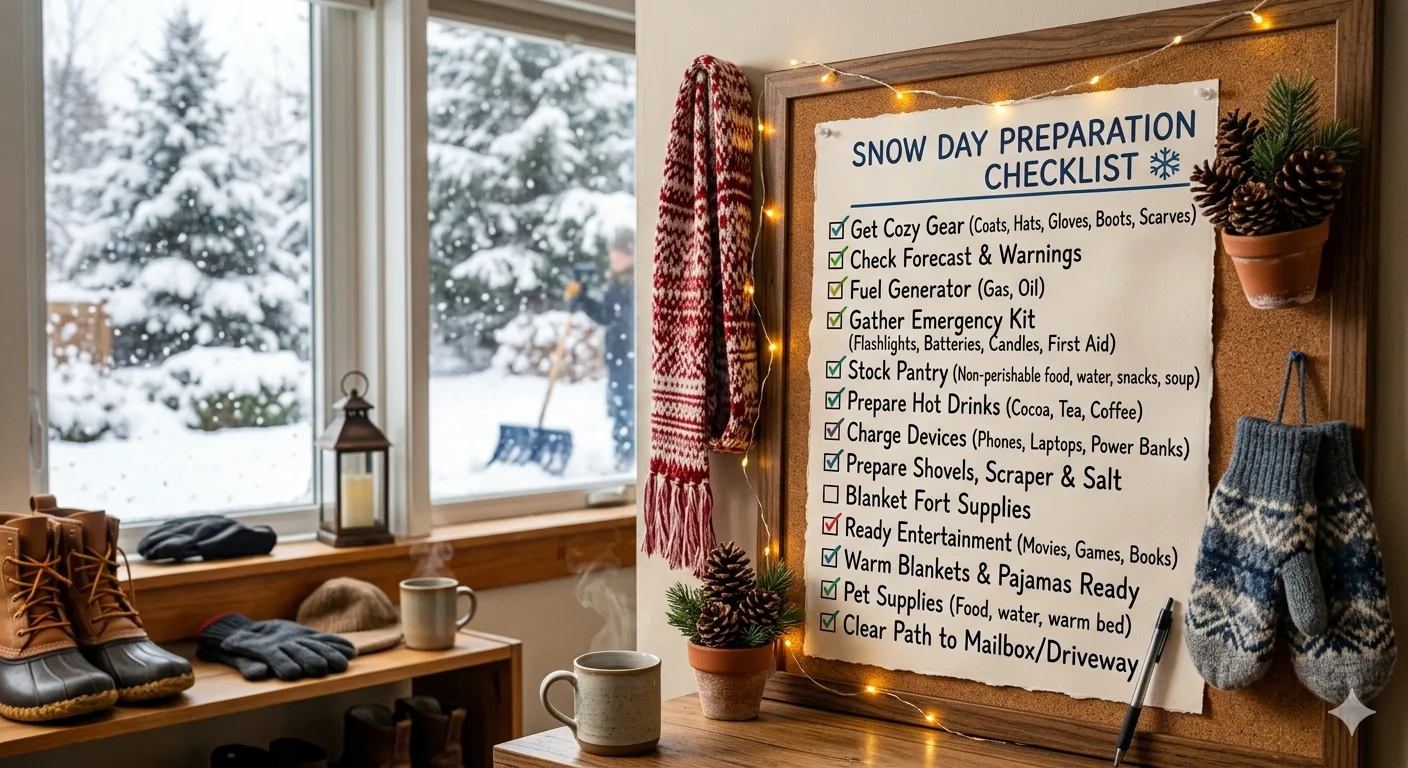
A snow day preparation checklist is not optional it could be the difference between a safe, comfortable stay-at-home day and a dangerous emergency. Winter storms in 2025 and 2026 have already claimed more than 100 lives across the United States, knocked out power to hundreds of thousands of households, and made entire regions impassable for days at a time. Being ready before the storm is the single most powerful thing you can do.
The forecast said flurries. By 9 p.m. it says eight inches, freezing rain on top, and a chance that your power goes out before breakfast.
That is the exact moment a snow day preparation checklist earns its place. Not when the first flakes fall, but in the 48 hours before, when the grocery shelves are still full and the roads are still clear.
This guide is built for real households in the US, Canada and the UK. It covers what to buy, what to charge, what to check in your house and car, how to keep kids and pets safe, and what to do when the snow finally stops. You can read it top to bottom, or jump to the section you need.
Why I Built This Guide (and the Calculator Behind It)
I built my snow day calculator after watching parents in my area get confused about school closures. Group chats were full of guesses, rumors and screenshots that contradicted each other.
That experience shaped how I write about winter weather. A prediction can help you plan. It cannot replace the official announcement from your school district, and in my opinion no calculator ever will. Use any estimate as a reason to get ready early, then wait for the district's word before you make final decisions about work and childcare.
Preparation is the part you actually control. So let's get into it.
A Winter Storm Watch is your green light to take action. Treat it like a Warning completing your checklist during the Watch phase means you will never be caught scrambling when the Warning arrives.
What Is a Snow Day Preparation Checklist?
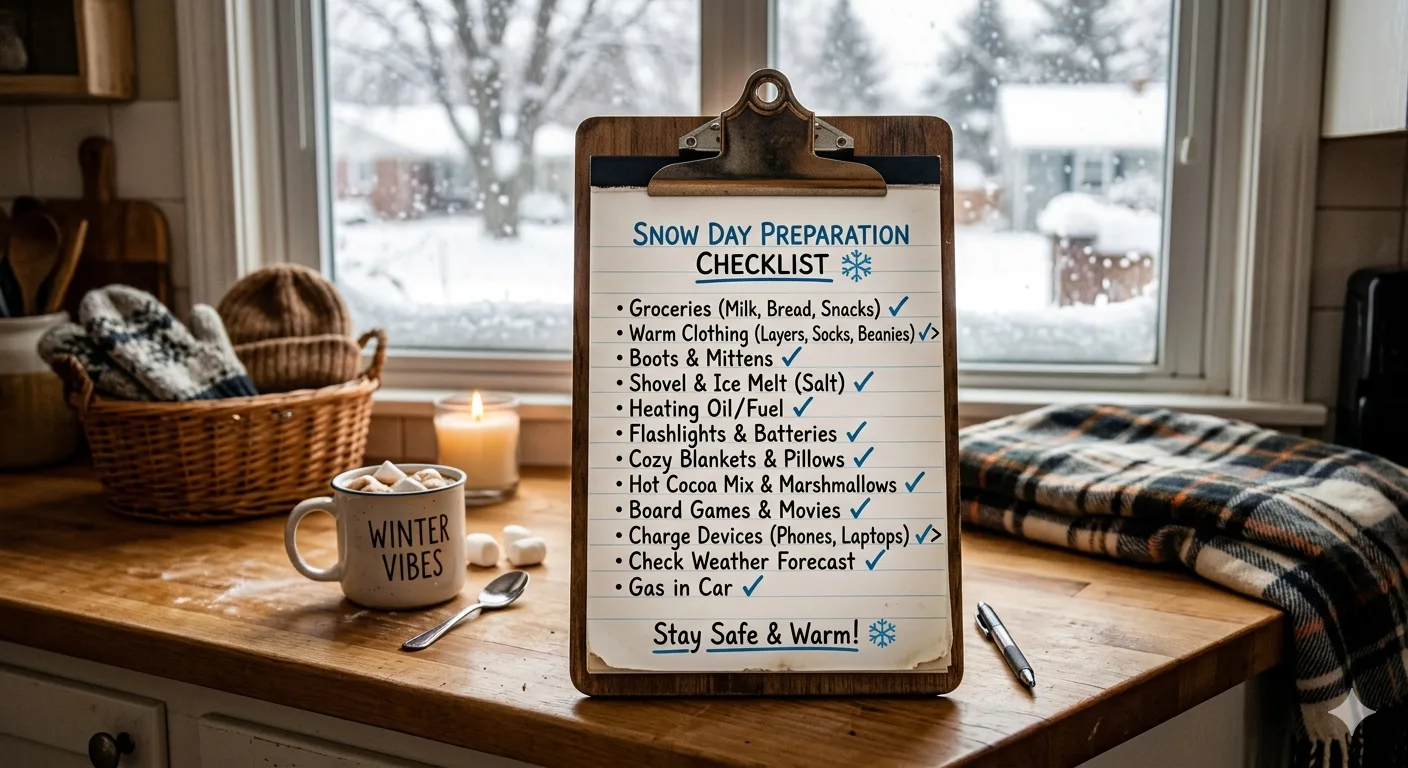
A snow day preparation checklist is a simple list of tasks and supplies that makes sure your household can stay safe, warm, fed and connected for several days if a winter storm shuts down roads, schools or power. It usually covers six areas:
- Alerts: knowing what the warnings mean and when to act
- Supplies: water, food, light, warmth, medication and documents
- Home: heating, pipes, roof and walkways
- Vehicle: fuel, tires, battery and an emergency kit
- People and pets: kids, older relatives, neighbors and animals
- Recovery: what to check once the snow stops
How Much Preparation Does Your Household Need?
Not every home faces the same risk. A healthy adult in a city apartment needs less than a rural family with a newborn and a well pump. Use this table to decide where to put your effort first.
| Household | Biggest risk | Priority actions |
|---|---|---|
| Older adult living alone | Cold indoors, medical device failure, isolation | Tell your utility about medical equipment, stock extra medication, arrange a daily check-in call |
| Family with a baby | Heat loss, running out of formula or diapers | Backup heat plan, at least a week of formula and diapers, warm sleep layers |
| Family with school-age kids | Childcare gaps, carbon monoxide, boredom | CO alarms, backup childcare plan, indoor activity kit |
| Rural household | Long isolation, slow emergency response | Seven days of supplies, safe generator setup, full fuel tank |
| Apartment renter | Building heat failure, limited control | Landlord emergency number, extra blankets, charged power banks |
| Healthy adult in town | Travel accidents | Three-day kit, stay home during the storm |
Step 1: Understand the Winter Weather Alerts in Your Country
The wording of a warning tells you how much time you have. Here is how it works where most of our readers live.
United States
The National Weather Service uses a watch, warning and advisory system. A common mistake is treating these as three levels of the same thing. They are not. A watch means the storm is possible and you still have time. A warning means it is imminent or already happening.
- Winter Storm Watch: heavy snow, ice or blizzard conditions are possible, usually 12 to 48 hours out depending on your local office. This is your cue to start your full checklist.
- Winter Storm Warning: hazardous winter weather is imminent or occurring. Stay home if you can.
- Winter Weather Advisory: conditions will be a nuisance and may make travel difficult, but they fall below warning level.
- Ice Storm Warning: dangerous ice buildup is expected, often the one that brings down trees and power lines.
One 2024 change catches people out. Since October 2024, the Wind Chill Watch, Warning and Advisory have been renamed. You will now see an Extreme Cold Watch, an Extreme Cold Warning and a Cold Weather Advisory. The message is simple: cold can be dangerous with or without wind.
Canada
Environment and Climate Change Canada issues snowfall warnings, winter storm warnings, blizzard warnings and freezing rain warnings. Criteria differ by region, so a snowfall warning on the Prairies can look very different from one in Atlantic Canada. Check the alert criteria for your own area rather than assuming.
United Kingdom
The Met Office uses a colour system of yellow, amber and red warnings for snow and ice. Yellow means be aware and expect some disruption. Amber means there is a good chance of travel delays and possible power cuts. Red means dangerous conditions and a real risk to life, so avoid travel.
Turn On Automatic Alerts
Do not rely on remembering to check the news. Sign up for your local emergency alerts, enable government weather alerts on your phone, and keep a battery or hand-crank radio as backup. Alerts that arrive at 2 a.m. can buy you hours.

A Simple Countdown Timeline
If the full checklist feels overwhelming, break it into stages. This is the order I would tackle things in.
48 Hours Before (Watch or Amber Stage)
- Check your supplies against the lists below and buy what is missing
- Fill your fuel tank and refill any prescriptions
- Test your carbon monoxide and smoke alarms
- Move your shovel, ice scraper and de-icer somewhere easy to reach
- Put out a message to any older neighbors or relatives who may need help
24 Hours Before
- Charge every phone, tablet, laptop and power bank
- Spread de-icer or sand on steps and paths before the snow lands
- Fill a few jugs and the bathtub with water for flushing and washing
- Bring pets, bikes and anything loose indoors
- Set your freezer and fridge to their coldest settings
12 Hours Before (Warning or Red Stage)
- Park away from trees and power lines
- Prepare one warm room and gather bedding there
- Cook a hot meal and fill a flask or two with hot water
- Agree on a family plan for who calls whom if the network goes down
The Emergency Supply Checklist
Most emergency agencies recommend at least 72 hours of supplies. For a serious storm, especially in rural areas, aim for five to seven days. Here is what to gather.
Water
- One gallon (about four litres) per person per day for drinking and basic hygiene
- Extra water for each pet
- Water purification tablets as a backup
- Knowledge of where your main water shut-off valve is, in case a pipe bursts
Food That Works Without Power
Choose things you can eat cold or heat in minutes. Think about what your family will actually eat, not what looks good on a list.
- Canned soup, chili, beans, tuna, chicken and fruit
- Peanut butter, crackers and bread
- Instant oatmeal, rice and pasta
- Granola bars, trail mix and dried fruit
- Shelf-stable or powdered milk
- Tea, instant coffee and hot chocolate
- Baby food and formula if you have an infant
- A manual can opener, the item people forget most often
If you plan to cook on a camp stove, use it outdoors or in a space with real ventilation, never in a closed room.
Light, Power and Communication
- LED flashlights and headlamps with spare batteries
- Battery or hand-crank radio
- Fully charged power banks (20,000 mAh will recharge a phone several times)
- Spare charging cables
- A written list of emergency numbers, in case your phone dies
Use LED lanterns rather than candles wherever you can. If you do use candles, never leave them unattended, especially around children and pets.
Health and Medication
- First-aid kit and any over-the-counter basics you use
- At least a week of prescription medication, more if your pharmacist will allow it
- A written list of medications and doses in a waterproof bag
- Spare glasses, contact lens solution and hearing aid batteries
- Hygiene items, including period products and toilet paper
Warmth
- Thermal base layers and wool or synthetic socks for everyone
- Hats, gloves and waterproof boots
- Extra blankets and sleeping bags rated for cold
- Hand warmers
- Emergency foil blankets as backup
Documents and Cash
- Copies of ID, insurance and prescriptions in a waterproof folder
- Some cash in small notes, since card machines and ATMs may fail
How to Prepare Your Home
Heating
Get your furnace or boiler serviced in the fall, not the night before a storm. Replace filters, clear vents and check that any chimney or flue is clean.
If you have a fireplace or wood stove, stock dry, seasoned firewood. If you rely on electric heat, work out now how you will stay warm without it.
A few rules that save lives:
- Never heat your home with a gas oven or stovetop
- Never burn charcoal indoors
- Plug space heaters directly into a wall socket, not an extension cord
- Keep anything flammable at least three feet (one metre) from any heater
Protect Your Pipes
Burst pipes are one of the most expensive winter problems, and they are mostly preventable.
- Insulate exposed pipes, especially those on outside walls
- Open cabinet doors under sinks so warm air reaches the pipes
- Let faucets drip slightly during hard freezes
- Never set your thermostat lower than about 55°F (13°C), even if you are away
- Disconnect and drain outdoor hoses
Roof, Gutters and Walkways
- Clear gutters before the first freeze to reduce ice dams
- Check for loose shingles or tiles
- Trim branches that hang over your roof or power lines
- Apply de-icer or sand before the snow, because it works far better than adding it afterward
- Keep your shovel inside the house or in an easy-to-reach spot, not buried behind the lawnmower
If you have pets or small children, look for pet-safe de-icer. Many common ice melts irritate paws and are harmful if licked.
Seal the Drafts
Weather-strip doors, caulk obvious gaps around windows and place a towel or draft stopper at the base of exterior doors. Window insulation film is cheap and surprisingly effective on single-pane glass.
Power Outage Plan and Carbon Monoxide Safety
Power cuts are where winter storms turn from inconvenient to dangerous. In January 2026, Winter Storm Fern left hundreds of thousands of customers without power in Tennessee alone, and health officials there reported a rise in carbon monoxide cases as people turned to generators. At a Nashville children's hospital, dozens of kids were treated for carbon monoxide exposure in a single week.
The lesson is blunt. Many cold-weather emergencies are not caused by the snow itself, but by the way people try to stay warm when the lights go out.
Generator and Heater Safety
- Never run a generator inside your home, garage, basement or shed, even with doors or windows open
- Place it at least 20 feet (six metres) from your home, with the exhaust pointing away from windows and vents
- Install battery-powered or battery-backup carbon monoxide alarms on every level and near bedrooms
- Never use a barbecue, camp stove or patio heater indoors
- If an alarm sounds, or anyone feels dizzy, has a headache or feels nauseous, get everyone outside into fresh air and call emergency services
Staying Warm Without Heat
- Pick one room. Close the doors and gather everyone in the smallest room with the fewest windows.
- Layer up. Several thin layers trap more heat than one thick one. Cover your head and feet.
- Block drafts. Rolled towels under doors and blankets over windows help more than you might expect.
- Eat and drink. Your body makes heat from food, so keep snacking and sipping warm drinks.
- Share body heat. Sleep together under blankets or in sleeping bags.
Babies, older adults and anyone with a medical condition get into trouble faster than most people think. Many health agencies suggest keeping living spaces around 64 to 68°F (18 to 20°C). If your home stays well below that, or anyone seems confused, drowsy or unusually cold, move to a warm place such as a friend's home or an official warming centre.
Protect Your Electronics
Unplug sensitive equipment during an outage so a surge does not damage it when power returns. Leave one lamp switched on so you know when electricity is back.
Get Your Car Ready
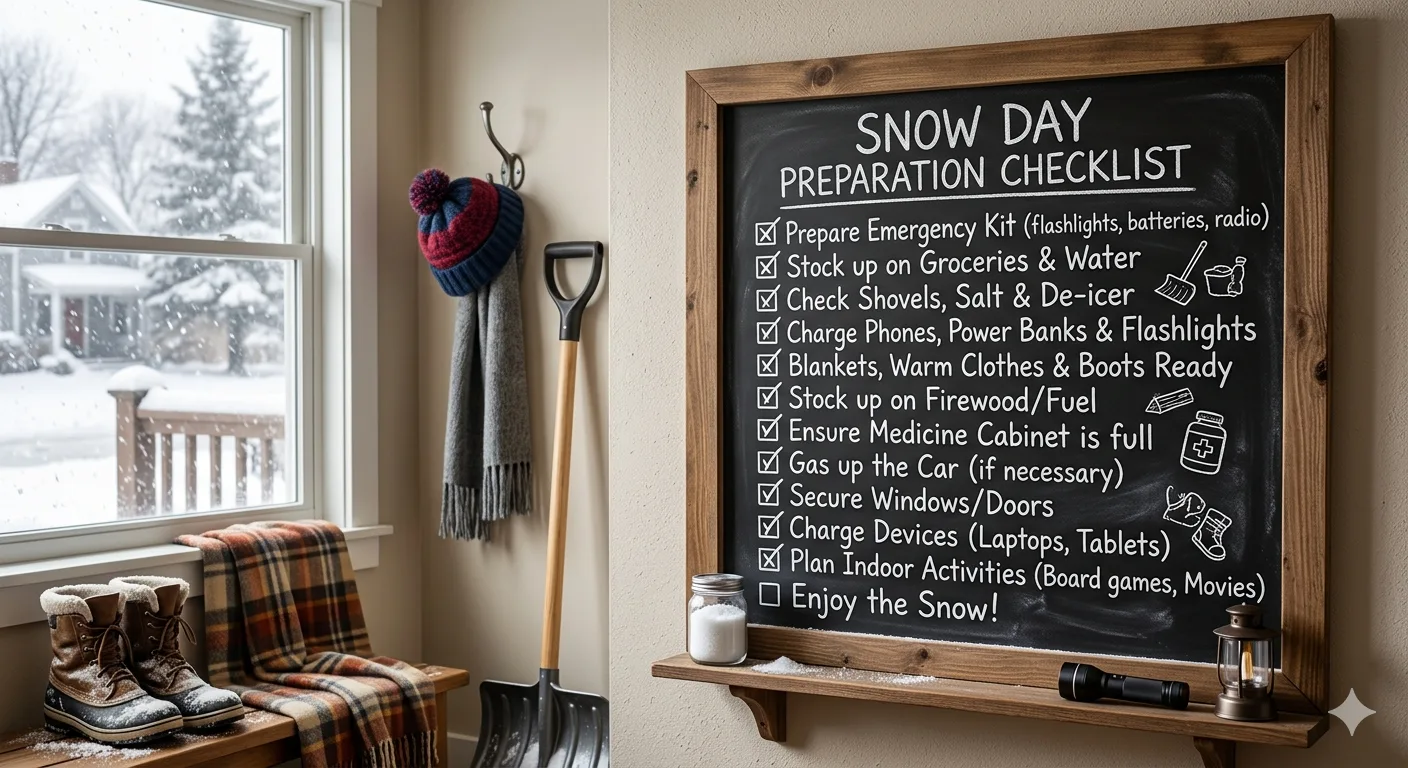
You may not plan to drive, but your car can still become a lifeline, or a trap if it is poorly prepared.
Before the Storm
- Fill the fuel tank, since stations can run dry or lose power
- Check tire tread and pressure. In the UK, 1.6 mm is the legal minimum and many drivers prefer more for winter. In North America, a penny test is a quick check
- Think about winter tires. In some places, such as Quebec, they are legally required in winter
- Test the battery, since cold weather reduces its capacity
- Top up antifreeze and winter washer fluid
- Check that wipers are in good condition
What to Keep in the Car
- Ice scraper and snow brush
- Small shovel
- Jumper cables or a jump starter
- Sand, cat litter or traction mats
- Blankets, hats and gloves
- Water and snacks
- Torch and spare batteries
- Phone charger or power bank
- First-aid kit and reflective triangles
If You Get Stuck
- Stay with your vehicle, because it is easier for rescuers to find
- Call for help and share your exact location
- Run the engine for about 10 minutes each hour for warmth, and make sure the exhaust pipe is clear of snow
- Crack a window slightly for ventilation
- Tie something bright to the antenna or mirror so you are visible
Snow Day Planning for Parents and School Closures
For many families the first question is not about water or batteries. It is: will school be open tomorrow?
That is the question that pushed me to build a snow day calculator in the first place. It can give you a sense of how likely a closure is based on conditions, which helps you decide whether to line up childcare tonight or relax. But I will say it again because it matters: your district's official announcement is the only answer that counts.
A Practical Plan for School Closure Mornings
- Know where the news will appear. Most districts post on their website, social media, local radio and a text or app alert system. Sign up for all of them.
- Have a backup childcare plan. Agree in advance with a partner, relative or neighbor who covers which day.
- Check for remote learning. Many districts now use remote days in place of traditional closures. Ask your school how it works and make sure devices are charged.
- Talk to your employer early. A quick message the night before is better than a scramble at 6 a.m.
Build a Snow Day Activity Box
Kids are thrilled for about three hours. After that, you will want a plan. Fill a box before the storm with:
- Board games, card games and puzzles
- Craft supplies and colouring books
- Books and a few downloaded shows or audiobooks
- Ingredients for a simple baking project
- A dry change of clothes for each child, so outdoor play does not end in tears
When children do go outside, dress them in layers, check their hands and feet often, and bring them in as soon as they say they are cold.
Health Risks: Frostbite, Hypothermia and Shoveling
Frostbite
Frostbite attacks exposed skin first: fingers, toes, ears, nose and cheeks. Early signs include tingling, numbness or a burning feeling, and skin that looks white, gray or waxy.
Move indoors and warm the area gently in warm (not hot) water. Do not rub it. Seek medical help if the skin is hard or discoloured.
Wind makes everything worse because it makes the air feel colder than the thermometer says. If you want to know how cold a day really feels on exposed skin, try a wind chill calculator. It is the cold-weather cousin of the heat index calculator, which does the same job in the other direction during summer heat.
Hypothermia
Hypothermia begins when body temperature falls below about 95°F (35°C). Watch for intense shivering, followed by confusion, slurred speech, clumsiness and extreme drowsiness. When shivering stops in someone who is still cold, it is a danger sign, not an improvement.
Call emergency services, move the person somewhere warm, replace wet clothes with dry ones, wrap them in blankets and give warm, non-alcoholic drinks only if they are fully alert.
Shoveling Safely
Shoveling heavy snow is hard work for your heart. If you are over 40, inactive, or have any heart condition, take it seriously.
- Warm up for a few minutes before you start
- Push snow instead of lifting it where possible
- Take breaks, and shovel in several short sessions rather than one marathon
- Avoid shoveling right after a heavy meal
- Stop immediately if you feel chest pain, shortness of breath or dizziness, and call emergency services
- If in doubt, pay someone else or use a snowblower
Read More : What to Do on a Snow Day
Freezing Rain, Sleet and Mixed Storms
Not every storm is a classic snowfall. Freezing rain, sleet and rain that flips to ice can be more dangerous than a foot of fluffy snow because they coat roads, branches and power lines in a layer that is hard to see and heavy to carry.
With these storms, plan for power cuts and falling branches first, driving second. If you are trying to judge whether an outdoor event, practice or work shift will be pushed back by wet conditions, a rain delay calculator can help you estimate the odds when precipitation hovers around freezing.
Pets and Livestock
- Bring pets indoors before the storm starts
- Store at least seven days of food and any medication
- Check water bowls often, since outdoor water freezes quickly
- Wipe paws after walks to remove salt and de-icer
- Keep a carrier ready in case you need to leave quickly
- If you have livestock, stock extra feed and bedding, use heated troughs and check animals at least twice a day
Look After Your Neighbors and Your Communication Plan
The people most at risk in a winter storm are often the ones nobody checks on. Before the storm, knock on the door of any older or vulnerable neighbors, swap phone numbers, and agree on how you will check in.
For your own household, set a simple communication plan:
- Choose one person outside your area as a contact everyone can reach
- Write key numbers on paper and have children carry a card
- Use text messages first, since they work better than calls on busy networks
- Know where your nearest warming centre, hospital and fire station are
- If someone relies on powered medical equipment, tell your electricity company ahead of time and ask about priority support
After the Storm: Your Recovery Checklist
The snow has stopped, but the danger has not. Take it one step at a time.
- Look around before going out. Check for fallen branches, ice on steps and hanging icicles above doors.
- Stay away from downed power lines. Treat every line as live and report it to your utility immediately.
- Clear vents and exhausts. Snow blocking a furnace or dryer vent can push carbon monoxide into your home.
- Check the roof and attic. Heavy, wet snow can be several times heavier than powder. Use a roof rake from the ground, never climb up in icy conditions.
- Run your taps. If water does not flow, you may have a frozen pipe. If a pipe has burst, shut off the main supply and call a plumber.
- Document damage. Take photos before you clean up, for insurance.
- Drive only when you must. Black ice stays long after roads look clear.
- Restock and review. Replace what you used and write down what you wish you had.

Common Snow Day Preparation Mistakes
- Waiting for the warning. By then, shelves are empty and roads are risky. Act at the watch stage.
- Buying only bread and milk. Fresh food spoils when the power fails. Stock shelf-stable meals instead.
- Using a generator too close to the house. Twenty feet is the minimum, not a suggestion.
- Forgetting the manual can opener. It happens every winter.
- Relying on one phone battery. Charge everything and keep a spare power bank.
- Treating predictions as announcements. Calculators and forecasts are useful, but the official word from your school or employer is what matters.
- Ignoring neighbors. A five-minute check-in can matter more than any gadget.
Final Thoughts: Be Ready Before the First Flake
A good snow day preparation checklist is not about fear or panic buying. It is about making a handful of small, sensible decisions ahead of time so that when the storm arrives, you can be calm and get on with your day.
Start with the basics: water, food, warmth, light, a safe way to heat your home, and a plan for your family. Then work outward to your car, your pipes, your pets and the people on your street. Review your list every autumn, and update it as your household changes.
If you want a head start on the next forecast, try the snow day calculator to see how likely a closure is where you live, and browse our full set of weather and planning calculators for more tools. Then bookmark this page, share it with a neighbor, and keep your checklist where you can find it quickly. Stay warm and stay safe.
Also Checkout :